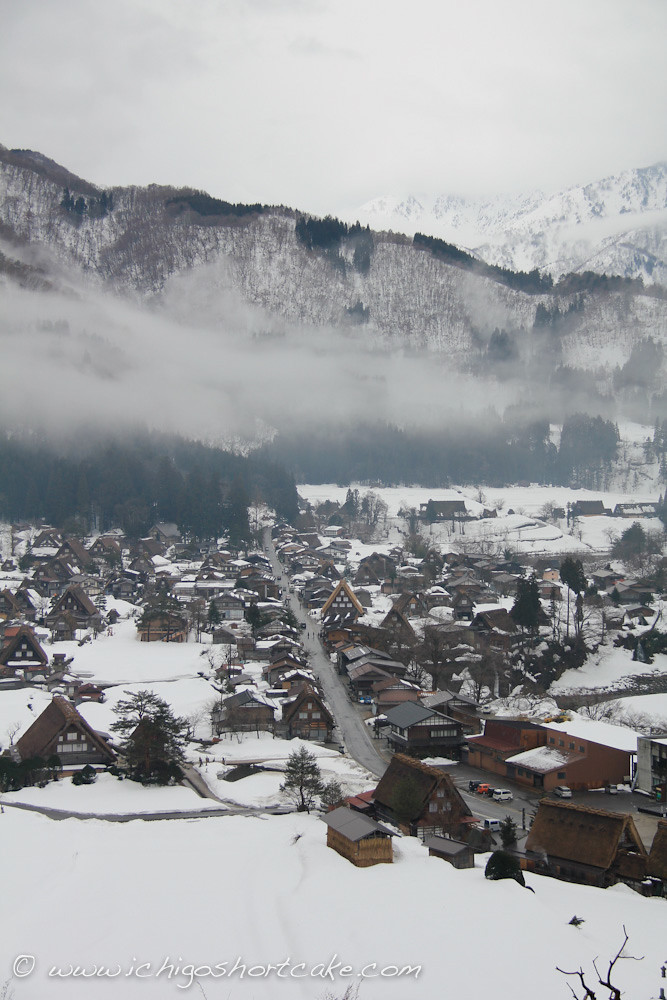
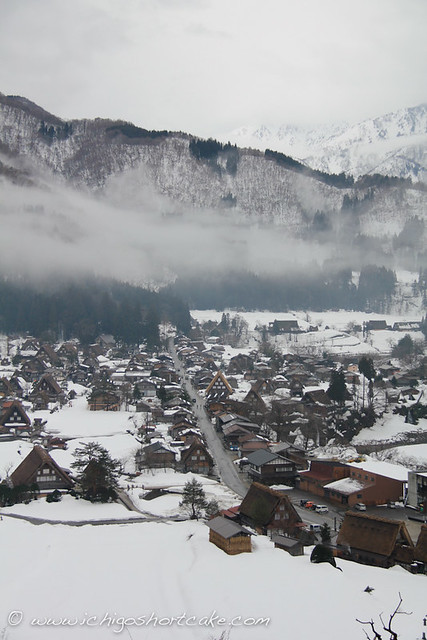
The day after Kyoto, we headed straight to Shirakawago (白川村 Shirakawa-mura) via shinkansen, local train and then bus. Shirakawago in the Gifu prefecture is a small and remote village hidden amongst mountains in the north-east direction of Kyoto. Along with the neighbouring Gokayama region, they were listed as UNESCO world heritage sites in 1995 are famous for their thatch-roofed houses (called gassho zukuri) and the heavy snow. In fact, it's one of the snowiest places in the whole of Japan and in the world as it's located on the peak of a tall mountain (Mount Haku) and is over 95% covered in trees. Gassho means hands together as if in prayer (due to the shape of the roof).
According to Wikipedia, as of July 2011, there were around 1734 people living in the Shirakawa region.
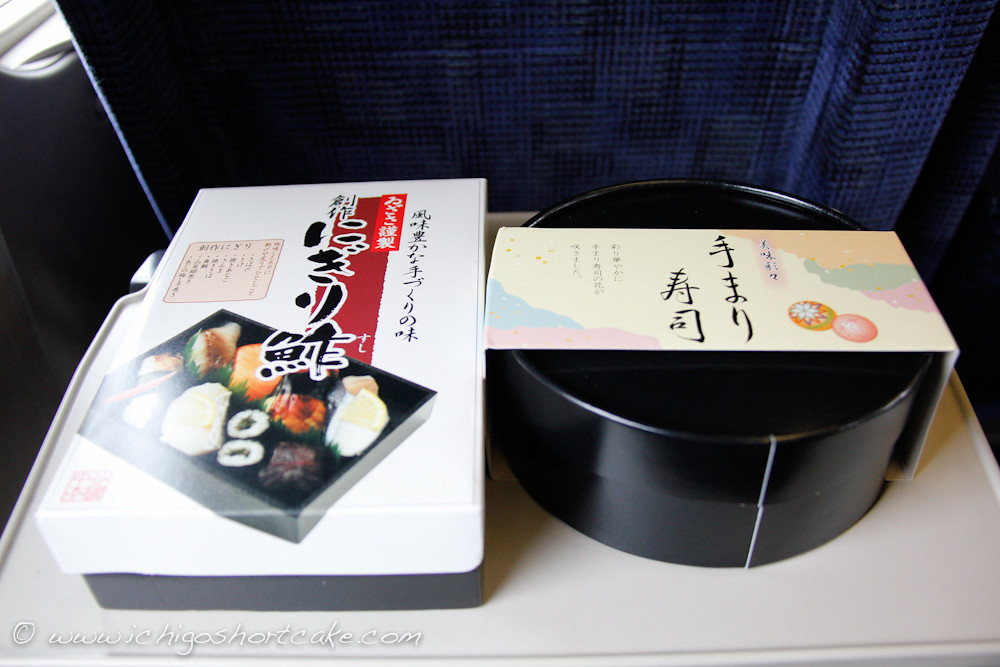
Yuye and I ate melon bread for breakfast and made our way to the JR Kyoto Station. This time we were smarter and bought sushi type ekiben (train station bentos) which tasted better cold than the deep fried ones we had during an earlier trip on a shinkansen.
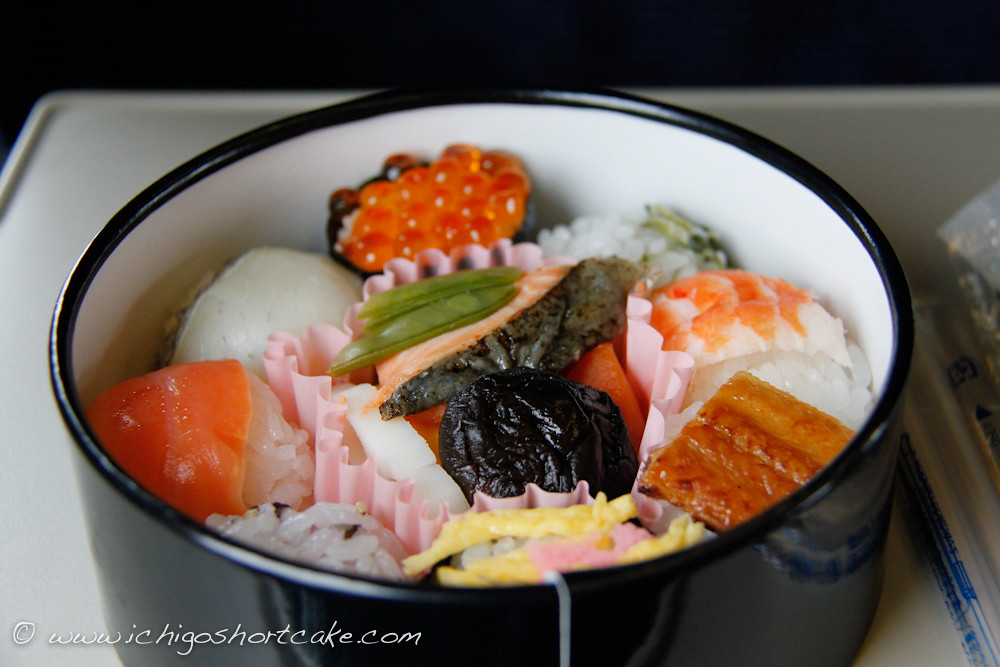
Yuye ordered a set for 1000Yen which was a seasonal one with onigiri balls (rice balls) topped with various fish, salmon roe, prawn and egg strips. It also included steamed veggies with a piece of cooked salmon in the middle. We both found this box to be a lot better than the ones we had last time.
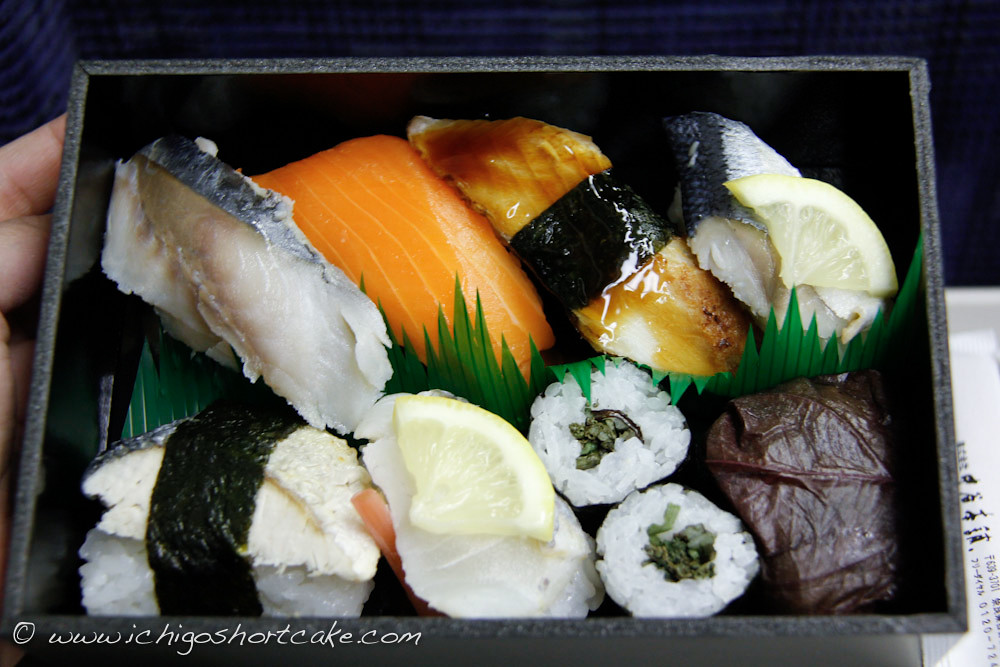
I ordered a set for $880Yen and had nigiri sushis (sushis with rice at the bottom) topped with various fish (both raw and cooked). I didn't like mine as much because it had shiso wrapped things which I didn't know about and obviously Yuye ate those. I really can't stand the taste of shies for some reason. It has a very herby and strange taste that takes a lot of getting used to. 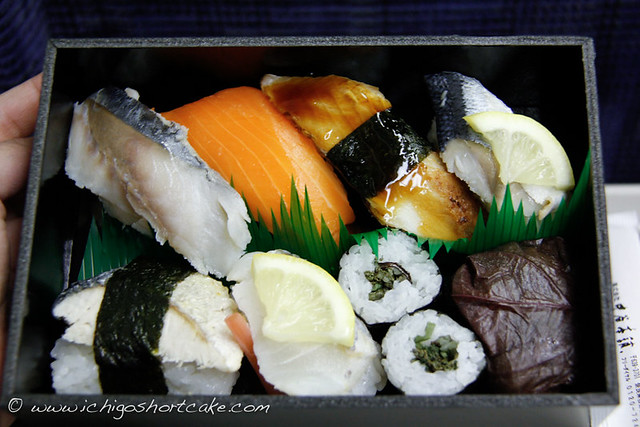
As there were no direct trains to Shirakawago, we had to first take the JR Tokaido Shinkansen from Kyoto to Nagoya (35-45 minutes, several trains per hour) and transfer to the JR Hida limited express train to Takayama (140 minutes, one train per hour) and then take the Nohi bus that departs from the station to Shirakawago. The bus ride took about 50 minutes one way and there are around 8-9 buses per day, the last one being 5:50pm departing from Takayama daily, or 7pm on weekdays. You can also go all the way to Kanazawa on the same bus if you wish to do so. The fare depends on whether it was one way or return and where the destination is (refer to website for details) but we got a return fare from Takayama to Shirakawago for 4300Yen per person. It's not exactly the cheapest ride and is not included in the JR Pass, but it's the only way to get to Shirakawago so it was necessary.
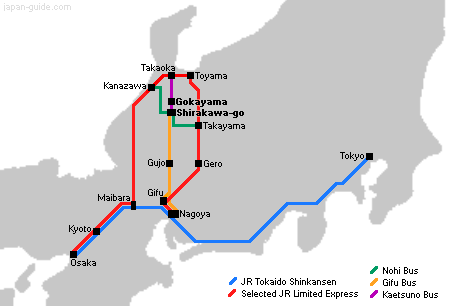 |
| Map courtesy of www.japan-guide.com |
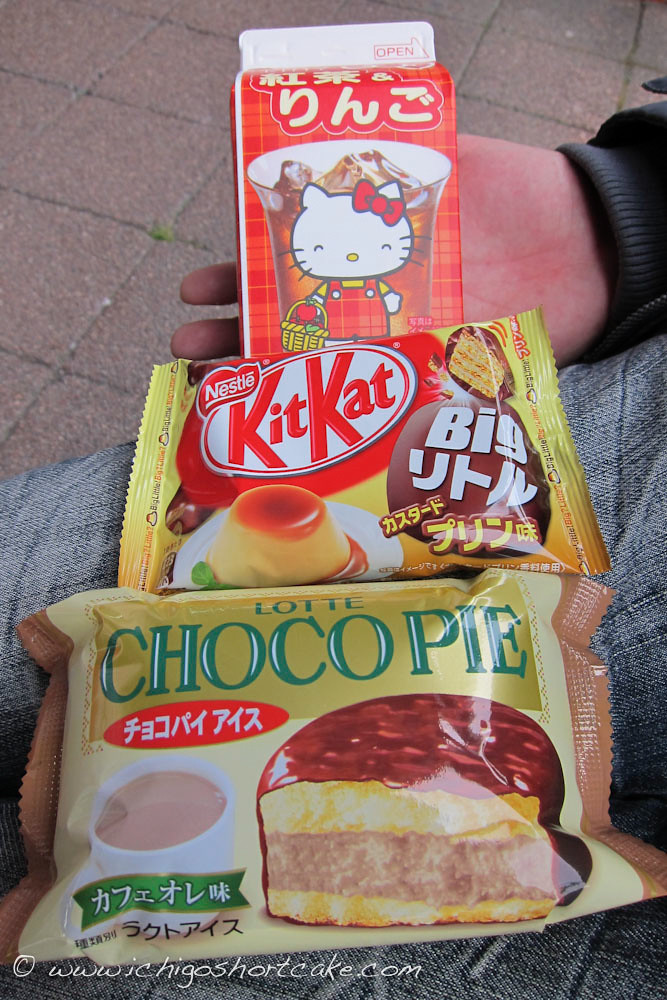
While we were in Takayama waiting for the bus, we bought a few nibbles from the convenience store - a Hello Kitty apple tea, a custard pudding Kit Kat and a Choco Pie. I swear I love Japanese convenience stores because they have such interesting and diverse range of food and drinks.

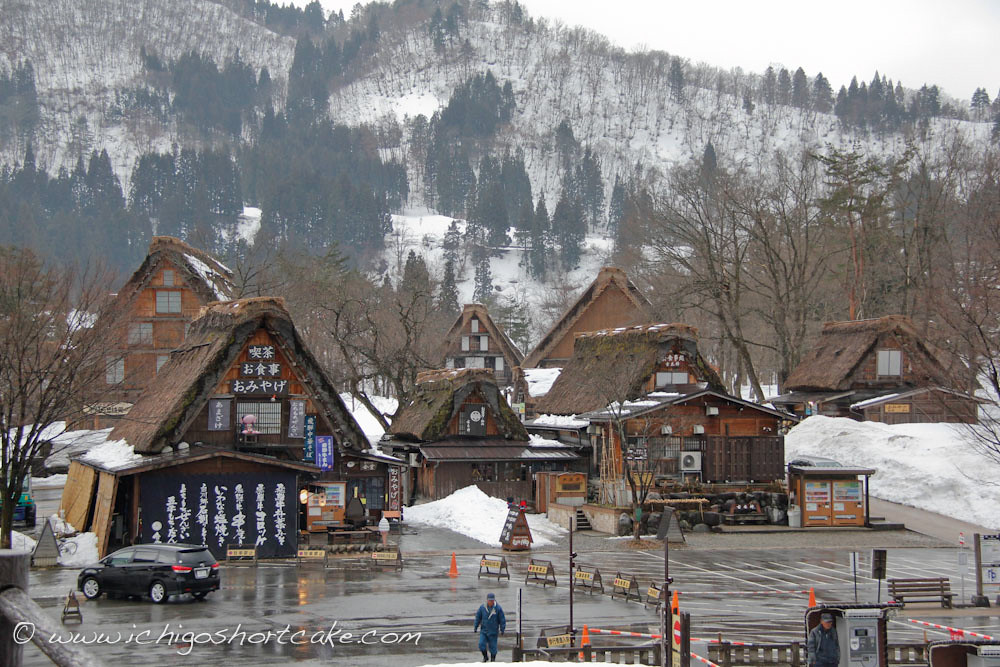
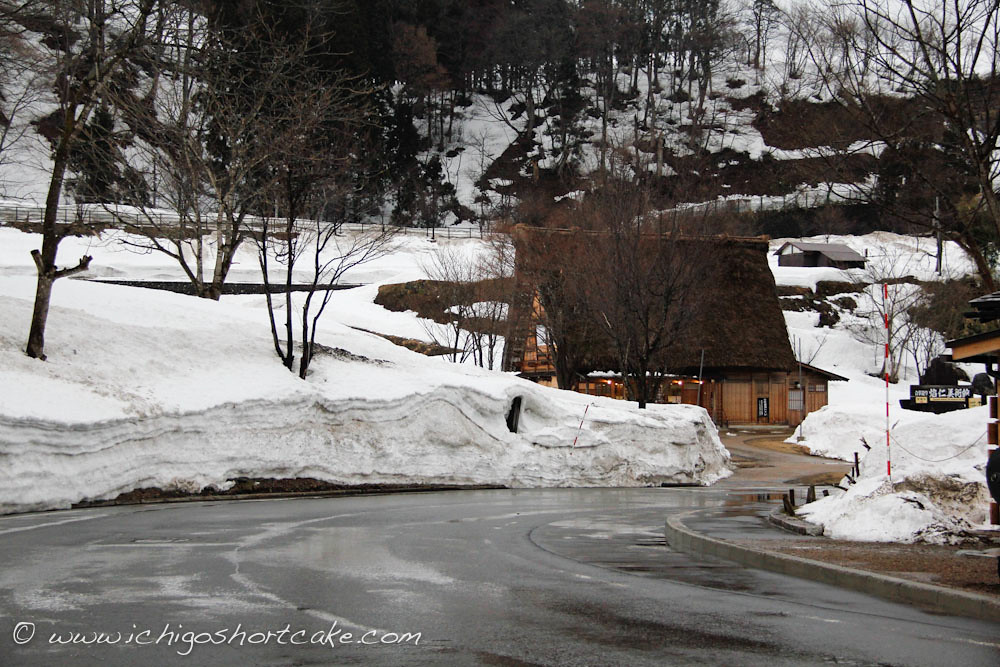
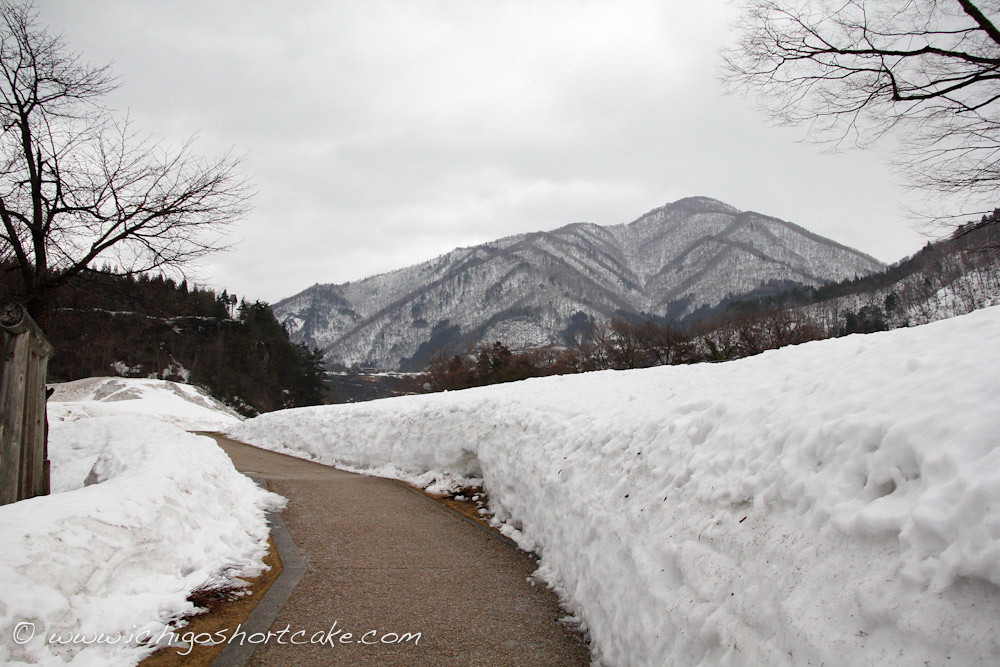
The bus ride was over in a flash. The scenery on the way was so fascinating I didn't even realise how fast the time went by. We weaved in and out of mountainous paths and the trees and mountains became whiter and whiter with snow as we got closer to our destination. The snow piles on the side of the road also became higher and higher. I think the road we took is the only path available in and out of Shirakawago so it would be very scary to be stuck there during heavy snow fall. When we finally arrived in Shirakawago, I was amazed at what I saw. It was indeed a village hidden amongst the mountains and we couldn't see it until the bus made that final turn off the highway. We stayed in Ogimachi, the largest village in Shirakawago and also with the most tourists.
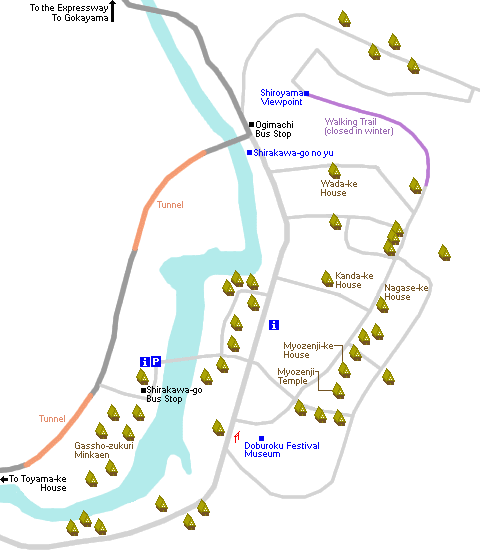 |
| Map courtesy of www.japan-guide.com |
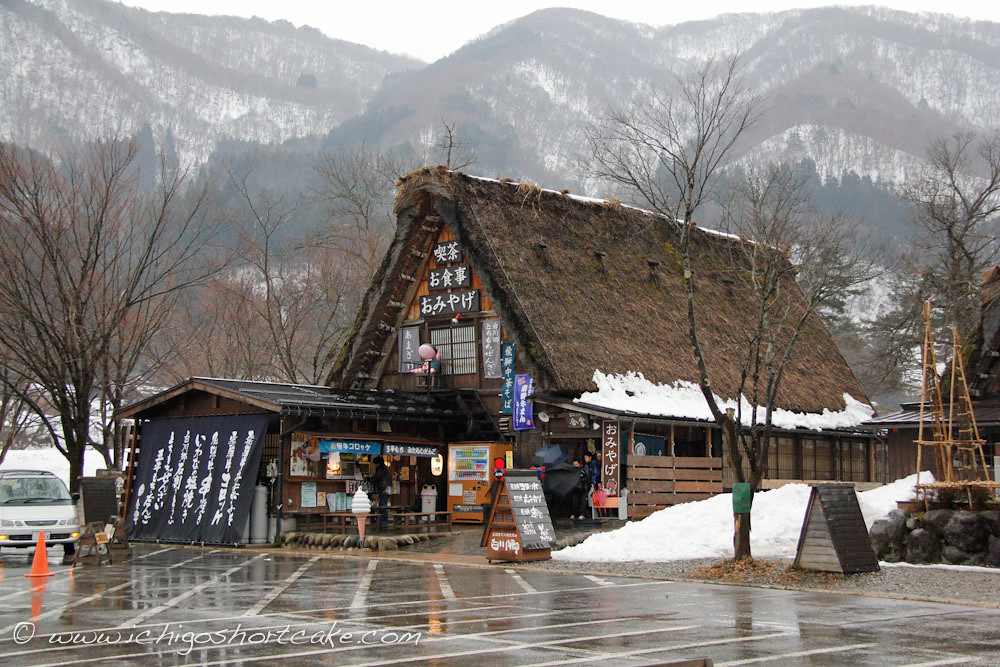
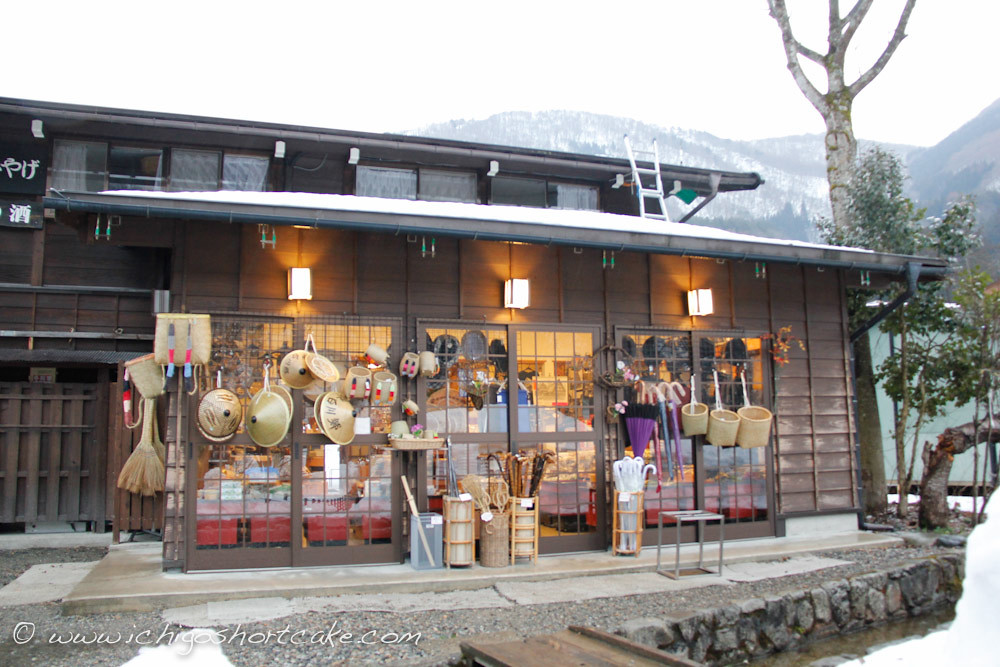
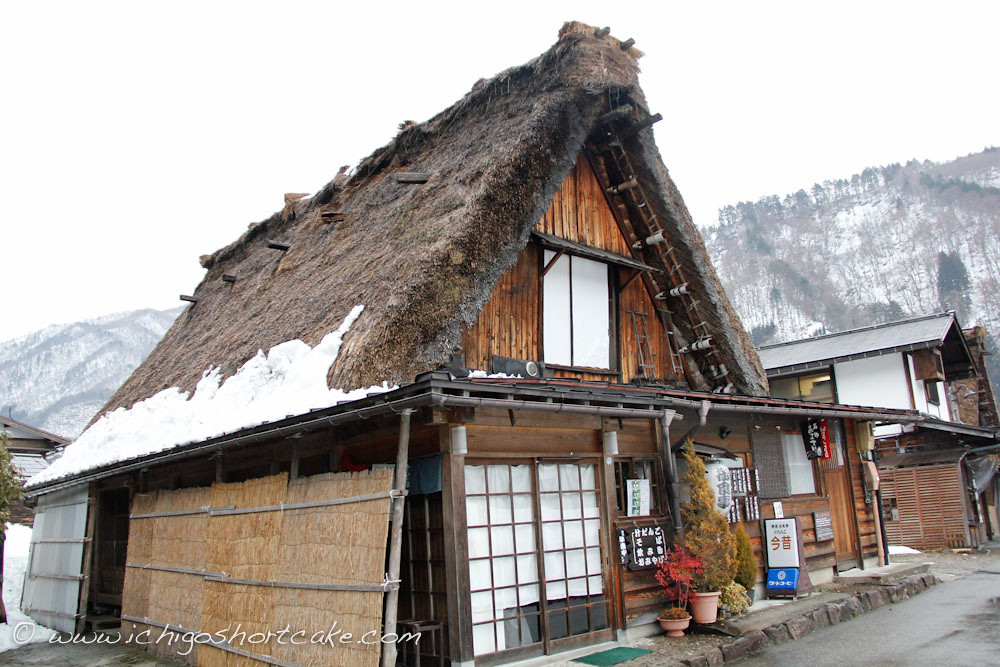
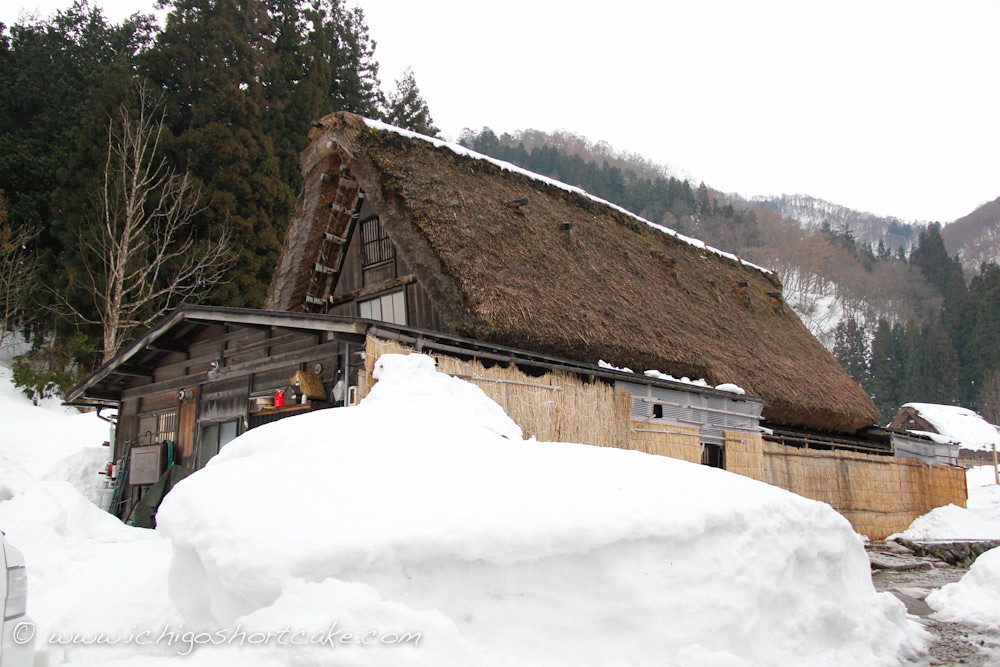
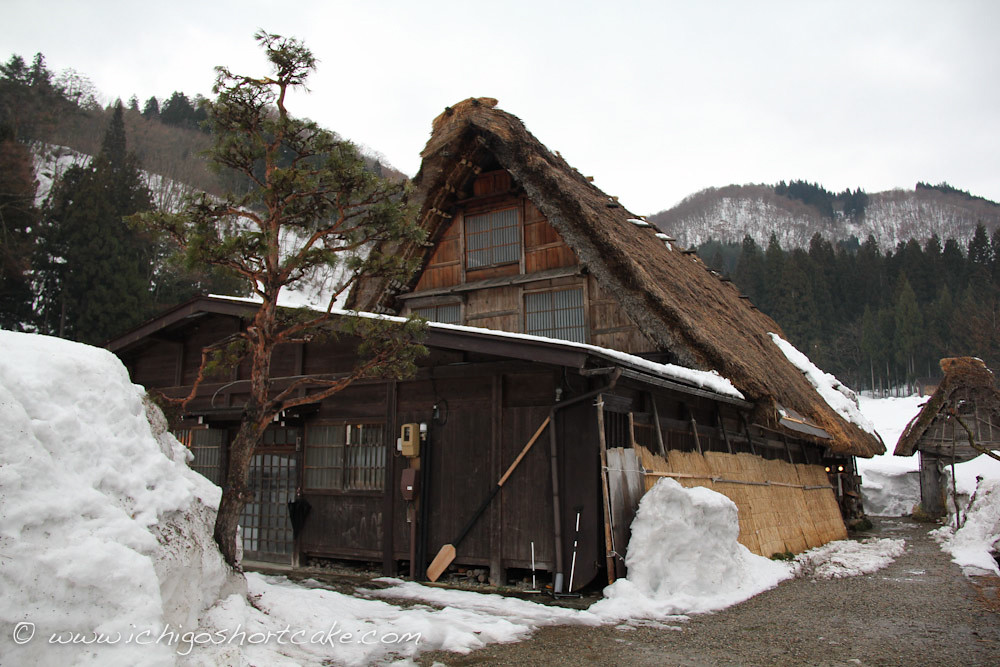
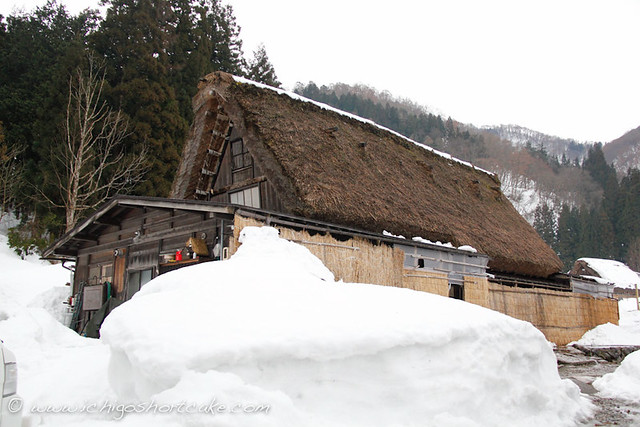
This is what the bus parked next to - a gassho zukuri house that has been made into a souvenir shop. Gassho Zukuri houses are built the way they are due to the heavy snowfall. The angle of the roof and the straw material makes the snow fall off easier and wouldn't collapse with the weight of the snow on top.
In fact there were a few restaurants and shops where the tourist bus parking area is and they all looked very traditional and beautiful. Although as expected, even a small village like this has vending machines.
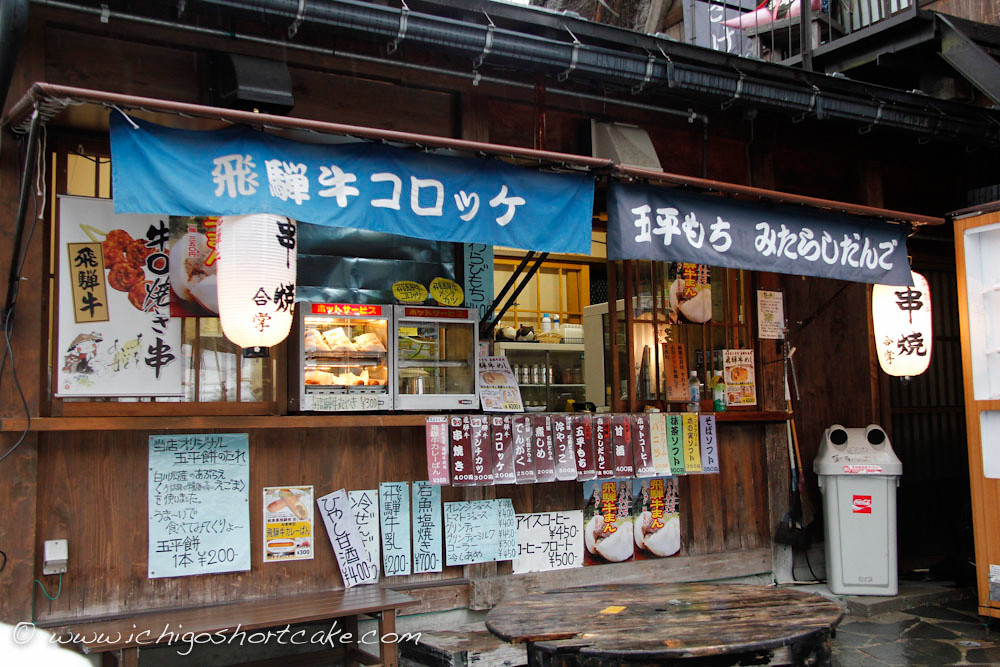
We were pretty hungry at the time so decided to try a bit of local food at the small food outlet just outside the souvenir shop. It sold the famous local specialty, Hida beef skewers (Hida is the region of Shirakawago and also includes Takayama so the beef is famous in the whole region). Doesn't that rubbish bin look like a frog face with a very big open mouth? I only just noticed that. :D
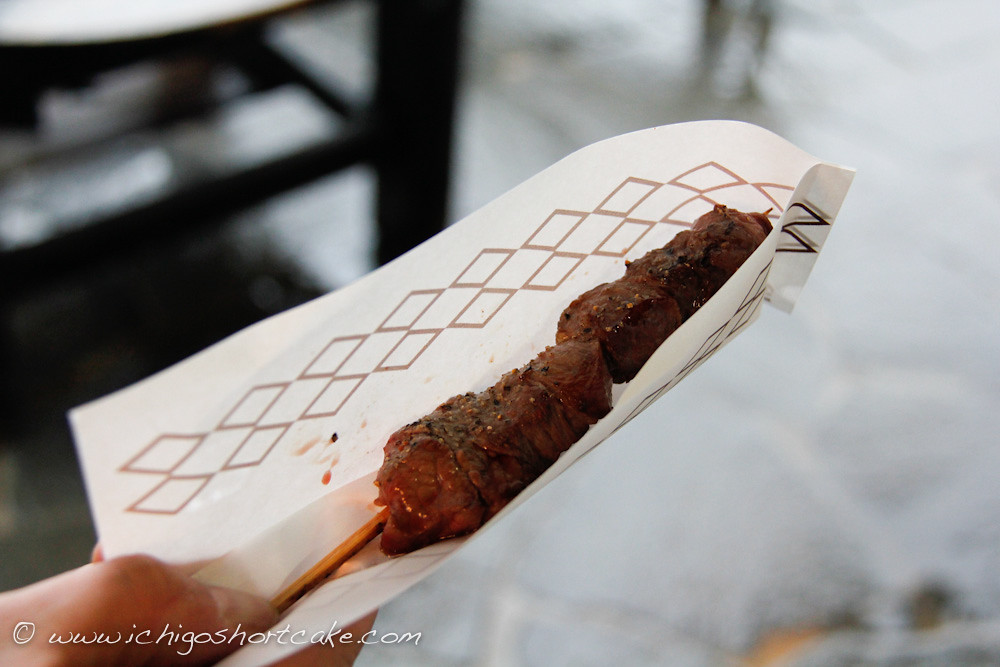
The Hida beef skewer (400Yen) was fantastic. It was piping hot as it was freshly made when we ordered and it just melted in my mouth. Hida beef is usually quite marbled which means it has a higher fat content and easily melts in the mouth when it's cooked. I was liking Shirakawago already.
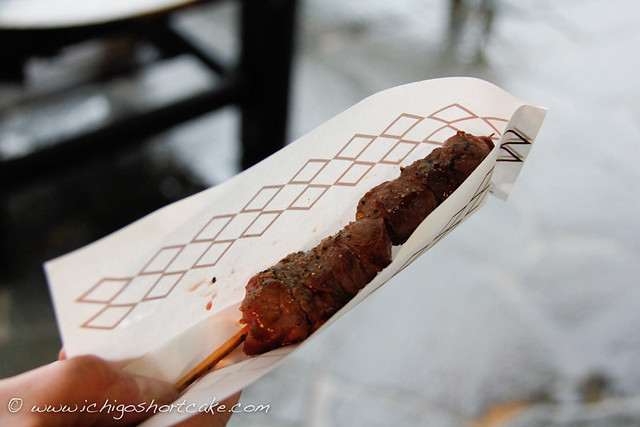 |
| Hida beef skewer - 400Yen |
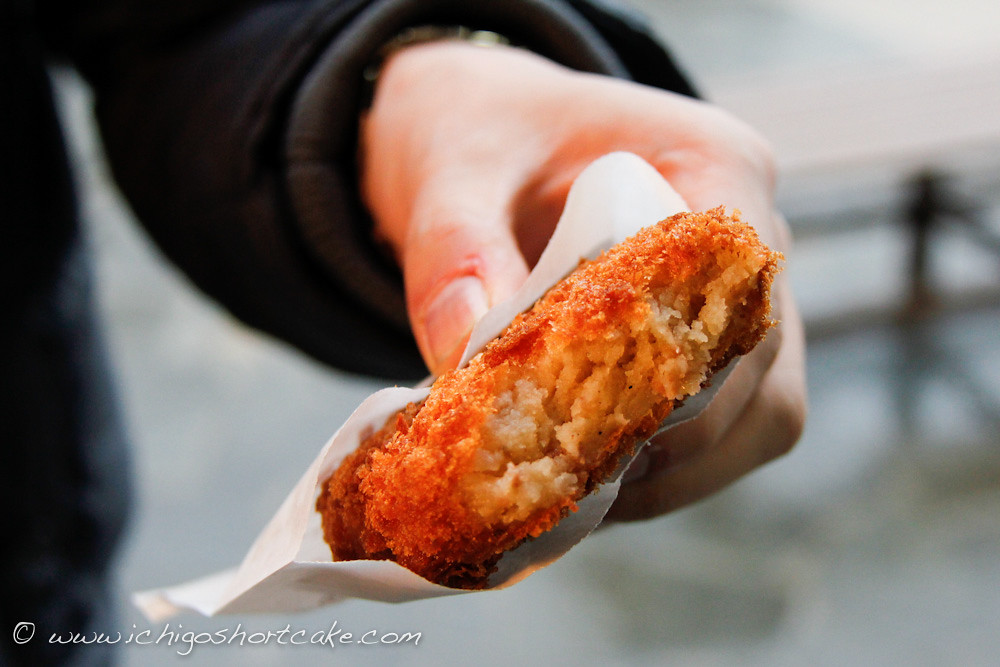
We also got a Hida beef croquette (200Yen) which really just tasted like normal croquettes with a tiny bit of meat in it. It wasn't really that meaty at all. I love croquettes though so I didn't mind that.
 |
| Hida beef croquette - 200Yen |
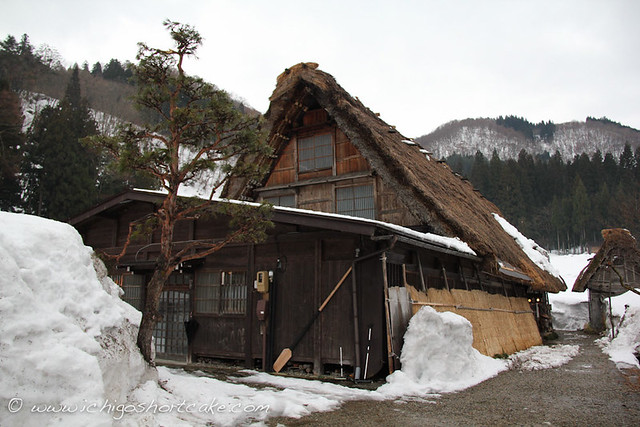
Many of the gassho zukuri houses have been turned into what the Japanese call minshuku which is a budget ryokan or Japanese style hotel where you typically stay with a local family in their house. The good thing about this is the cheap price and of course the ability to really experience life as a local. Meals (dinner and breakfast) are usually includes which was the case with us and in Shirakawago is highly recommended because there aren't many restaurants available.
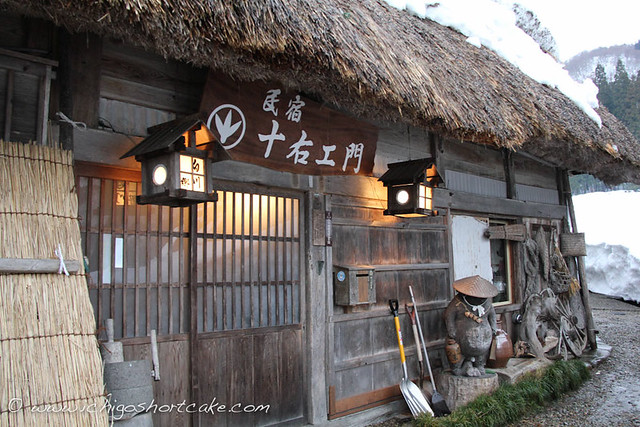
The minshuku we stayed at was called Juemon. It was a bit further than the rest of the minshukus, but it was still within walking distance. I had originally wanted to stay at another place called Hisamatsu by recommendation from Paul's Travel Pics as it was cheaper and I believe, the only minshuku that cooked their food on an open hearth. However, when I emailed the Shirakawago Tourism Association, they said Hisamatsu was fully booked for the date I was visiting.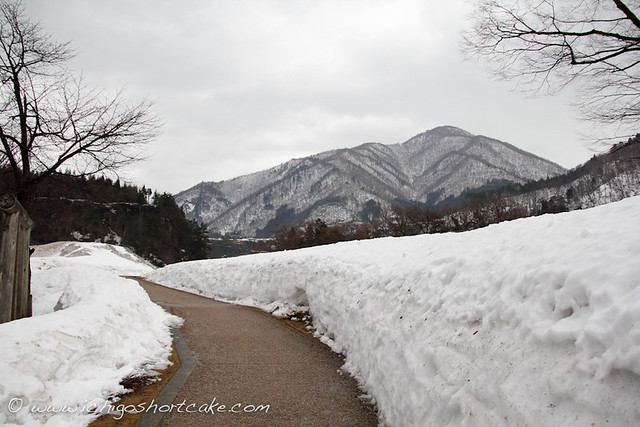
As Paul also suggested on his blog, you can either book through japaneseguesthouses.com if you don't understand Japanese at all (their site is in English) but the list of minshuku they deal with are limited and for some reason the prices they quoted were also more expensive. I obviously just emailed all my details to the Tourism Association (info@shirakawa-go.gr.jp) to which they sent their response in English very quickly and I had Juemon booked. Visit their website for a bit of information on each minshuku. Although everything is in Japanese, you can get an idea about what each minshuku looks like and what the costs are.
As you can see, we had a lot of fun walking towards Juemon as there were snow piled up very high (almost to my height in some places) and I felt like a little child seeing snow for the first time. I was treading in snow with my boots on and running around and laughing hysterically.
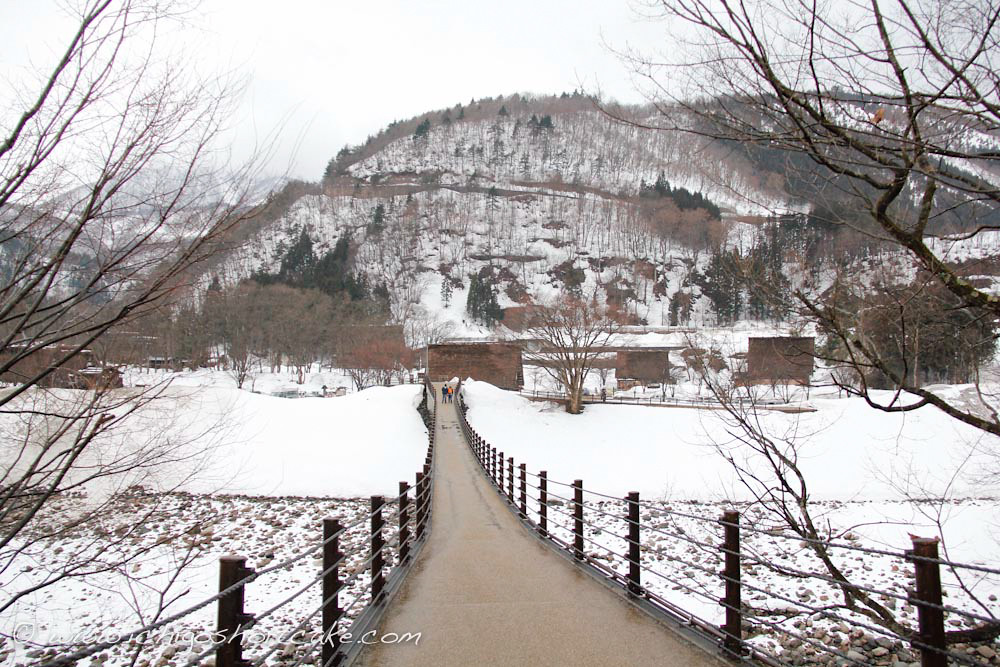
There was a long suspended bridge which shook and moved when people walked over. This bridge links the two sides of a river which was frozen.
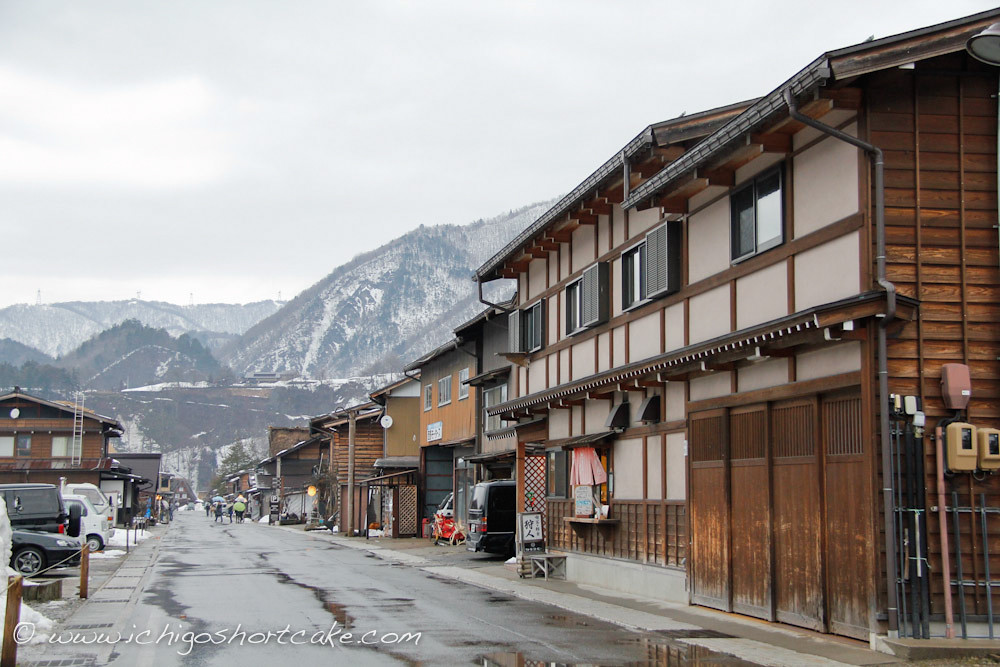
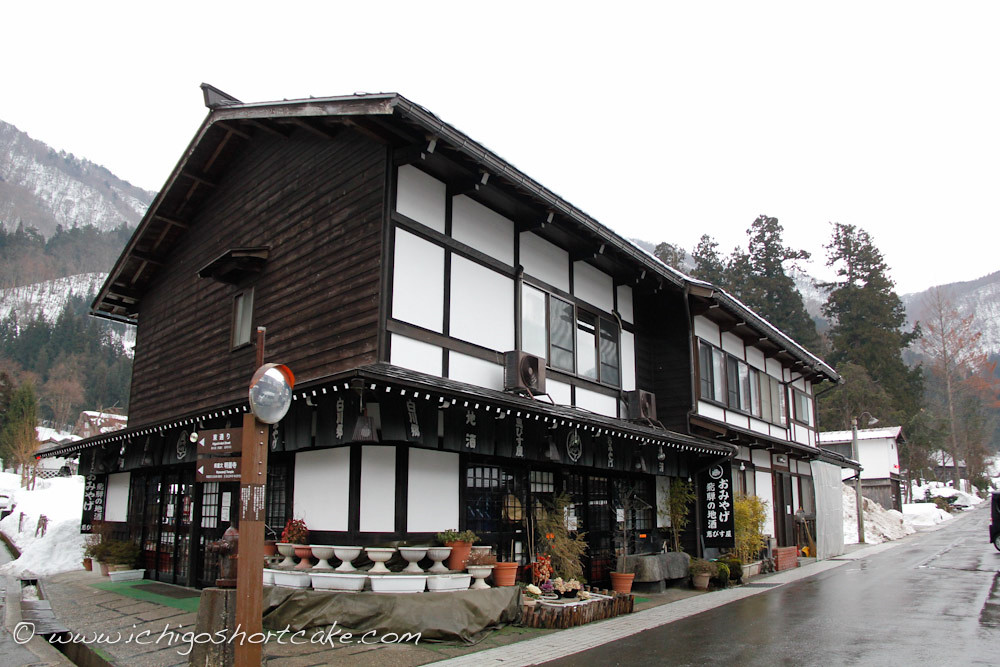
The town was so serene and quiet that I felt like I was dreaming. If I ignored the cars, it really felt like I had gone back in time, to an era where technology didn't exist and population was scarce. This was the main road that ran through the village.
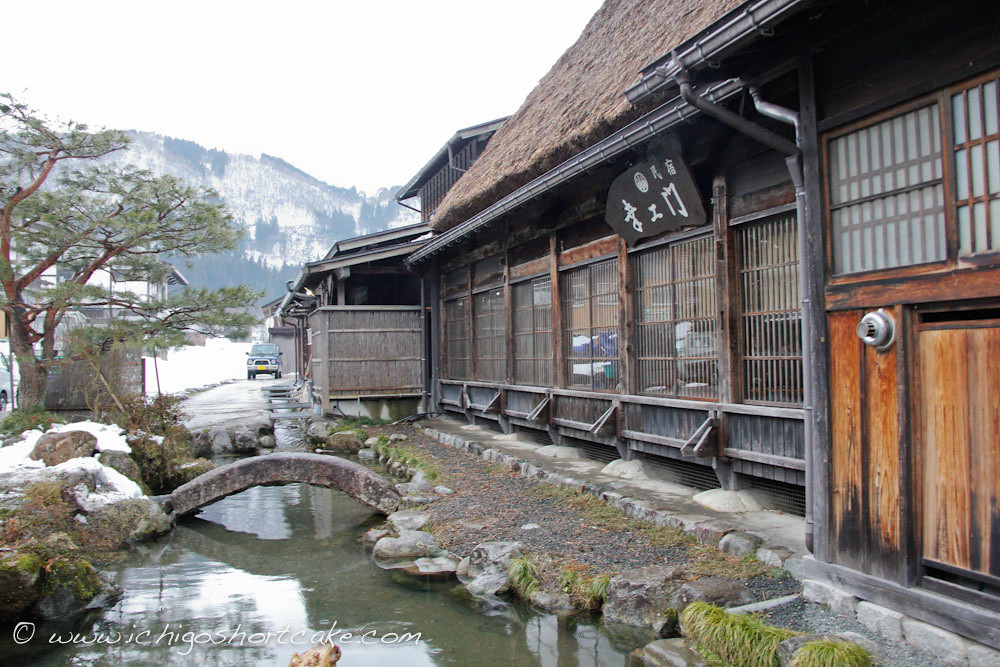
Other minshukus and shops:
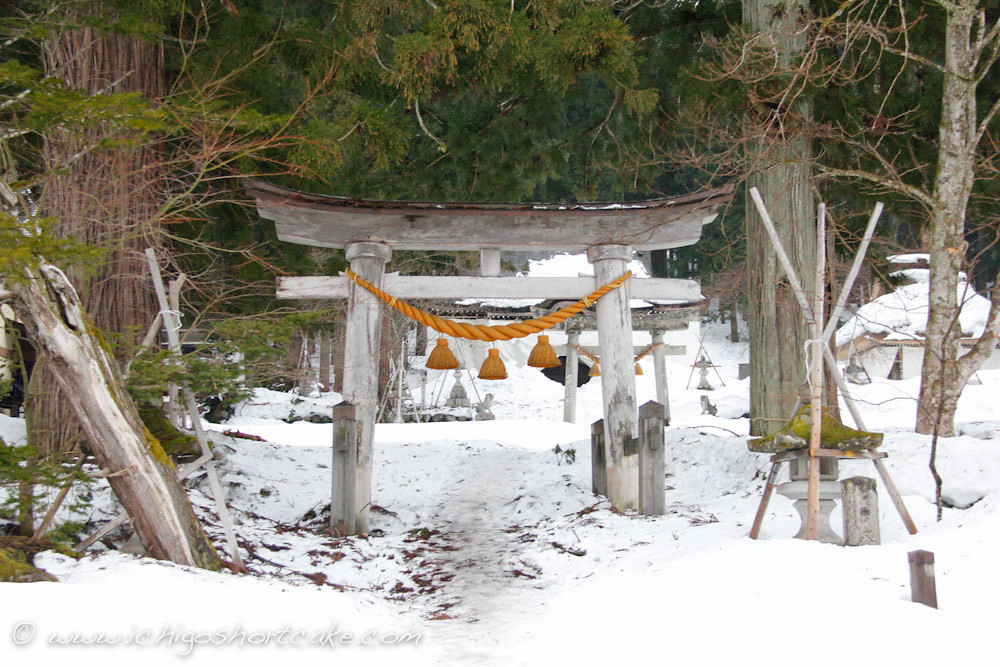
We also walked past a small shrine covered in snow. I should have gone inside to have a look but we were in a hurry to get to the minshuku so we could rest before dinner.
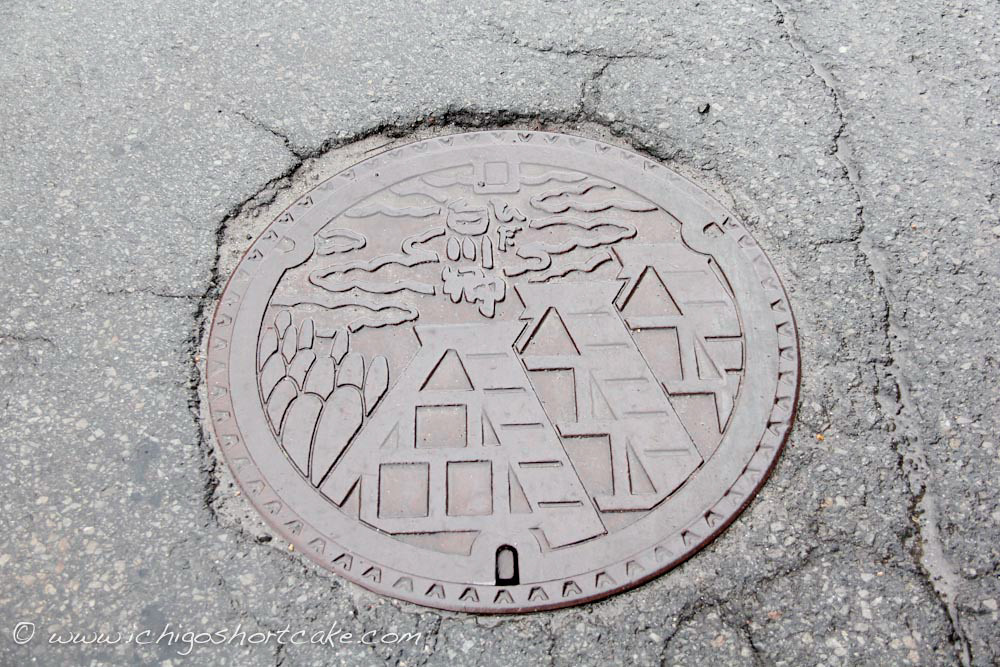
Even the manhole had Shirakawago and the gassho zukuri houses on it!
Juemon - minshuku we stayed at
Juemon looks quite similar to all the other minshukus. The whole stay cost us 9100Yen per person which at the time equated to around $225 for the both of us. This included a few hundred yen per person for heating (this only applies during winter as electricity from the heating cost extra) and 2 meals.
As we entered, we had to remove our shoes and change into slippers. The owners were very nice people and I had a brief chat to them about the stay and they happily showed us to our room while explaining about the meals and bath.
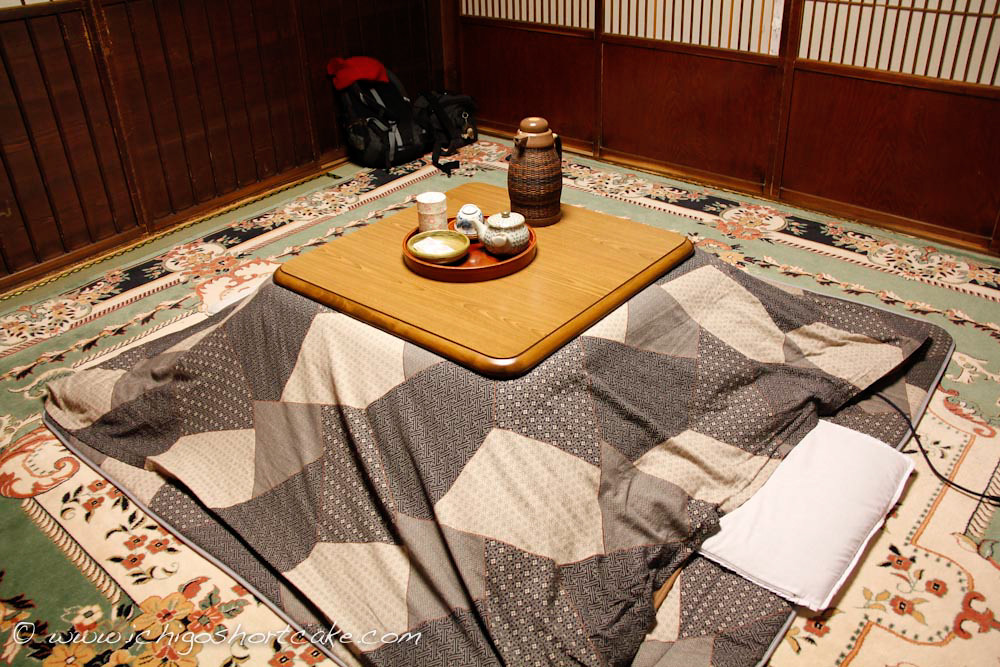
Our room has a tatami mat but it was almost entirely covered in a large rug. I guess this is to make the room a little warmer. The insulation in these minshukus are terrible as some of them are over 250 years old so the room was cold and not very sound proof. Throughout the night, I could hear the rain/snow falling outside, the TV in the owner's room and the constant sniffling and coughing from the Thai couple also staying the night. Our room can be opened up entirely from all 4 sides. Three sides open up to corridors and one side opens up into another room which was unoccupied. The room doesn't have TV or internet but was a fantastic chance to relax and escape from the busy city life.
What's that table thing in the middle of the room I hear you ask? Good question. It's a Japanese heated table called a kotatsu which with the blanket removed, looks exactly like a normal table but lower. The tabletop is removable so that a blanket can be inserted which is used to retain the heat from the electric heater underneath and you're meant to stick your legs underneath to keep yourself warm. I swear it's the coolest invention ever. I liked it so much that Yuye and I actually brought one back to Australia! We had to bring it on board the plane after transporting it physically on the shinkansen from Osaka to Tokyo. It was 25kgs and over 1metre high. Yes it was a pain to carry but was totally worth it. The best thing was it only cost me about $50AUD even though it was solid wood because we bought it second hand from a furniture store.
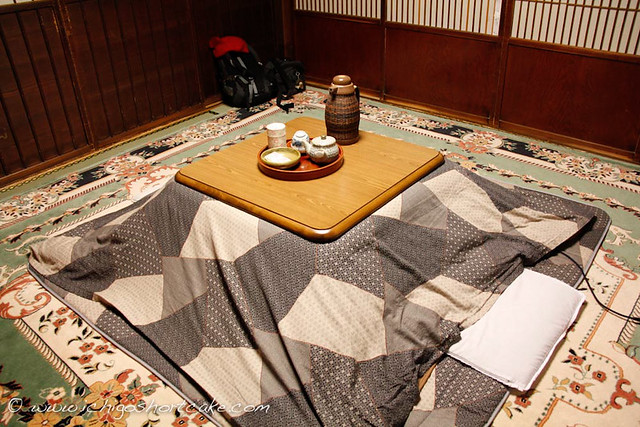 |
| Kotatsu - Japanese heated table |
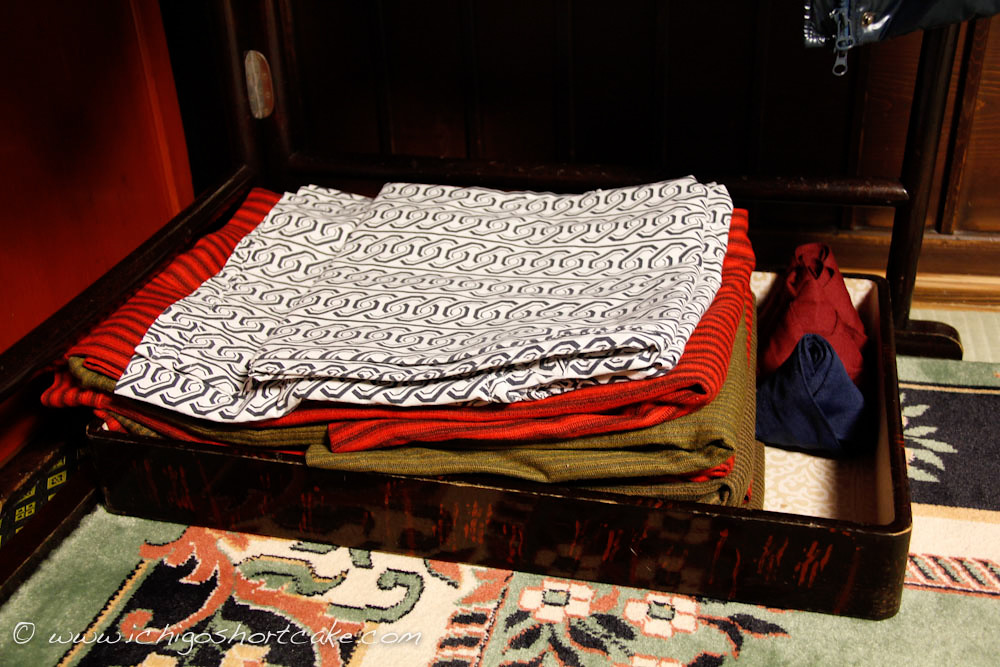
The stay includes the usual bathrobes or yukatas which we wore outside of our clothes to dinner.
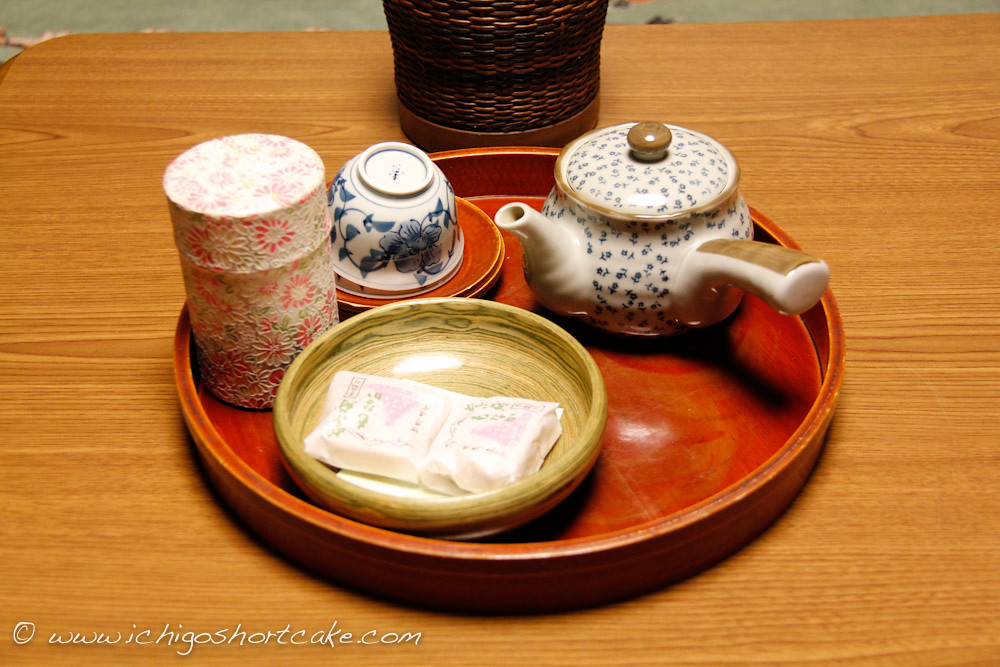
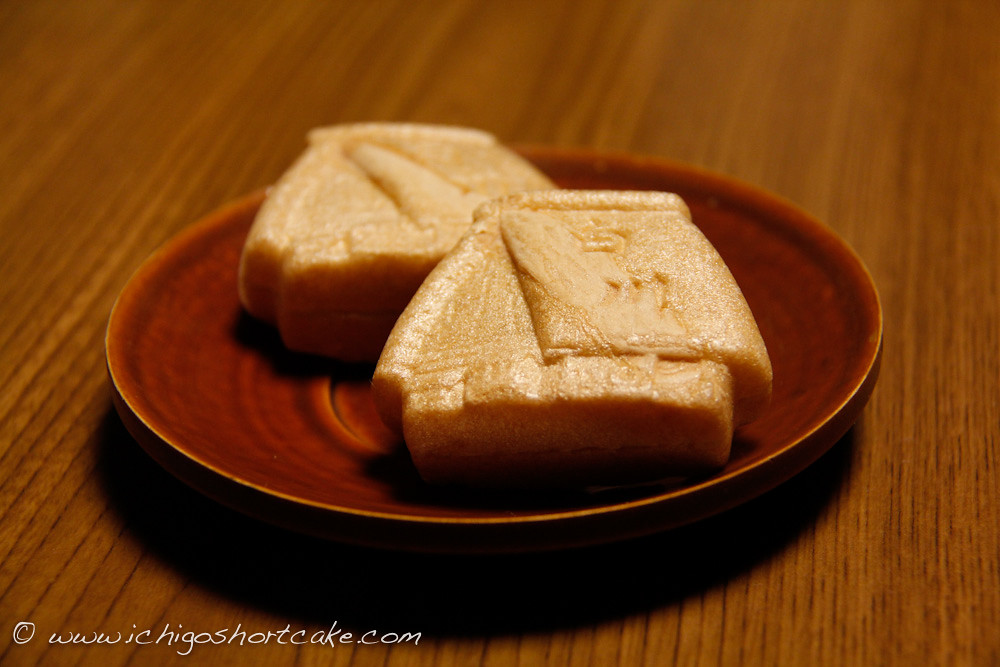
It also came with a tea set and sweets with actual leaf tea. Look at the cute gassho zukuri house biscuits! It had red bean paste inside and was quite sweet but went very nice with a cup of hot tea.
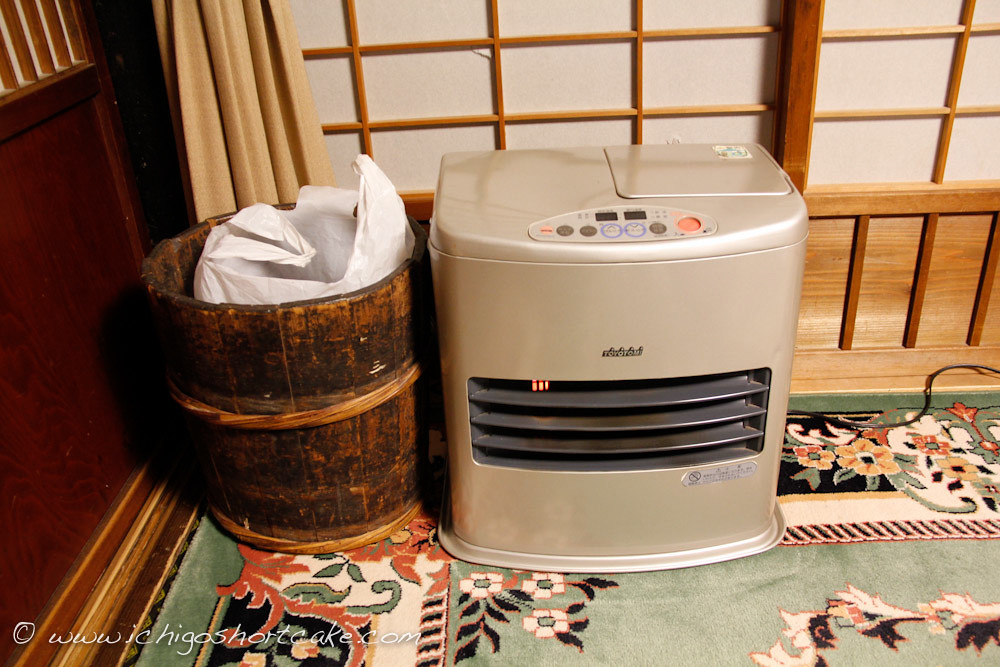
And a heater which took us ages to figure out how to work. It could be timed so that it stayed on while we fell asleep and automatically turn off later.
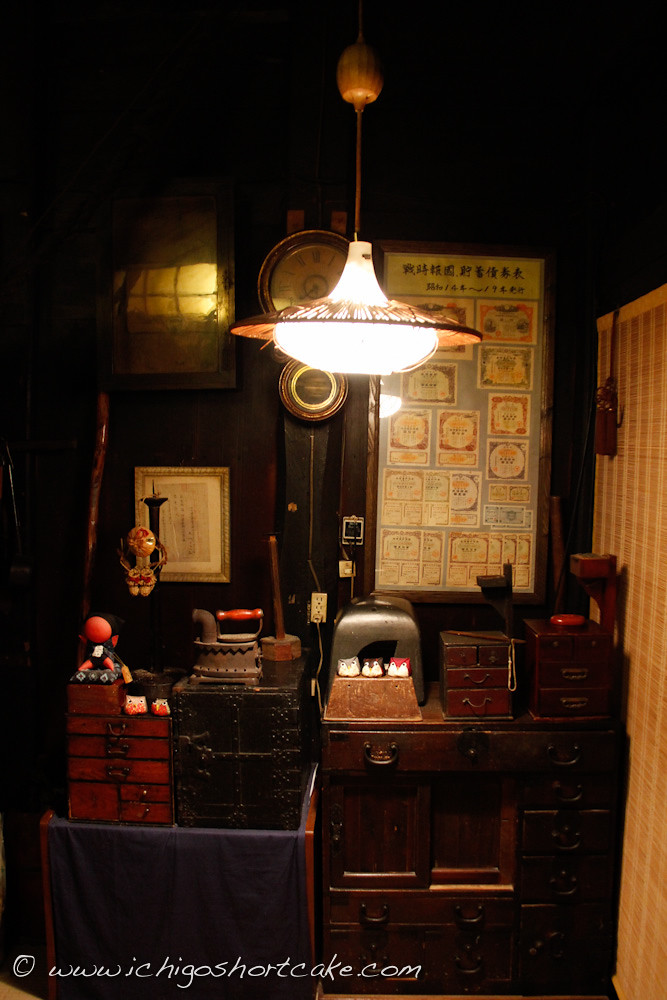
I absolutely loved the decor of the place. There were so many interesting figures and ornaments scattered around the house which made it so historical and beautiful.
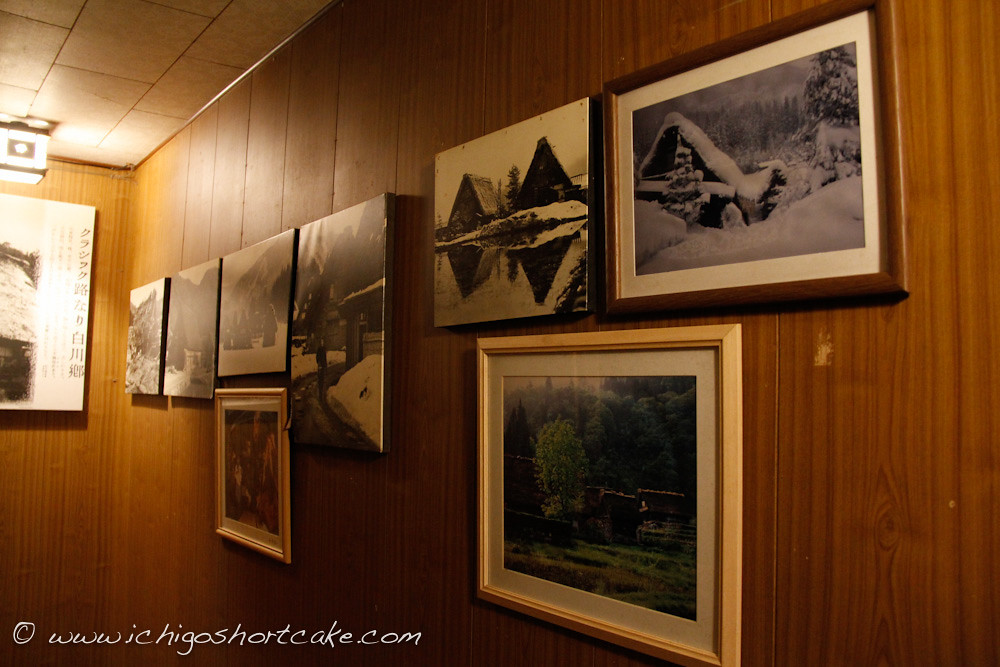
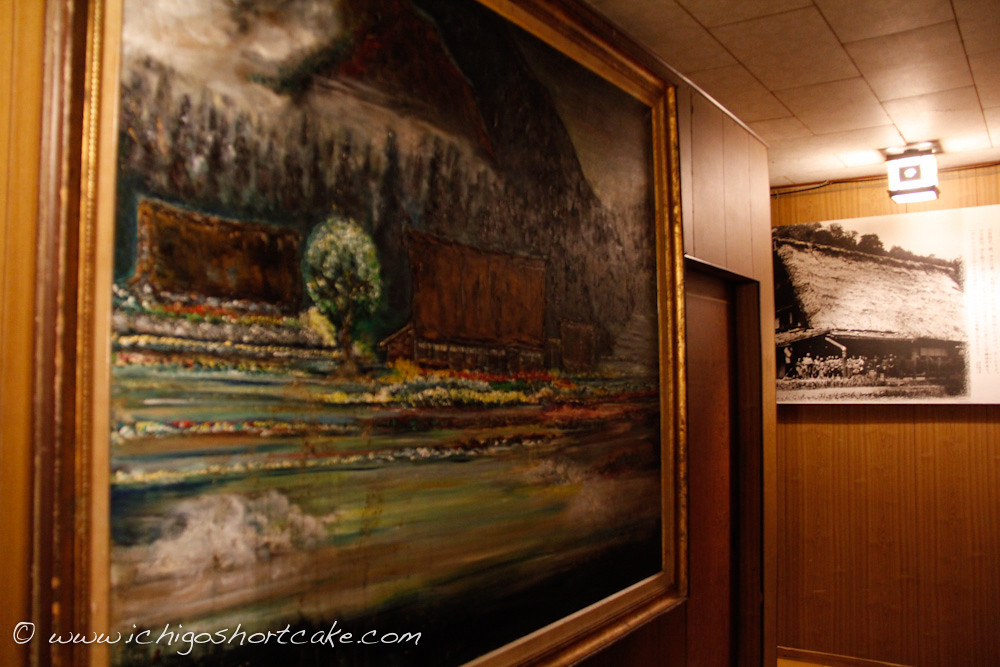
I also loved the paintings and photos that lined the walls, all of which were of Shirakawago.
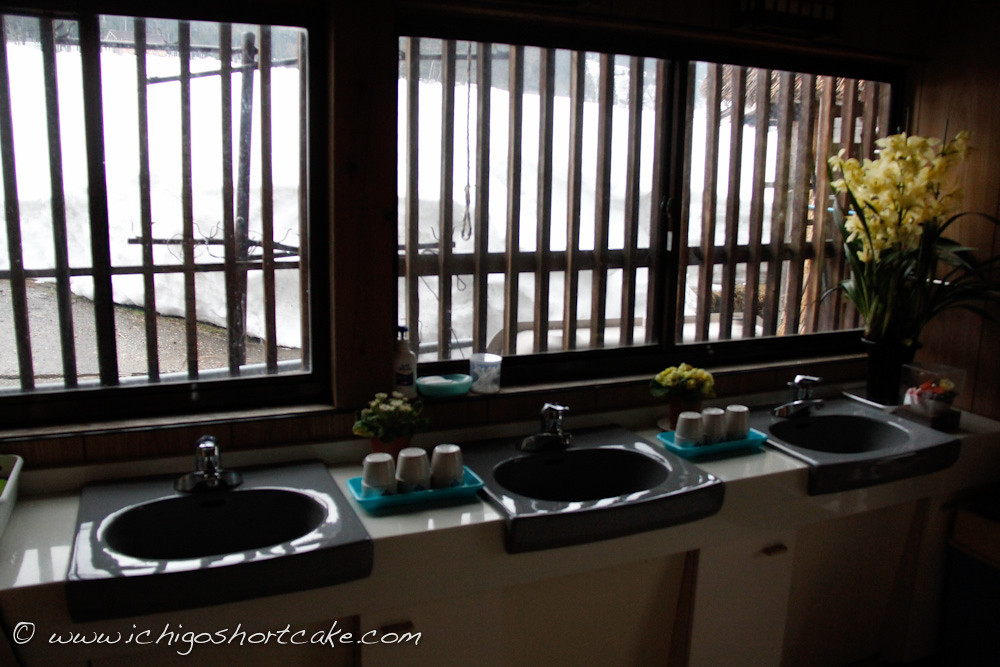
The house has obviously been renovated to cater for quite a number of guests. You can tell from the sinks below (there were 3!).
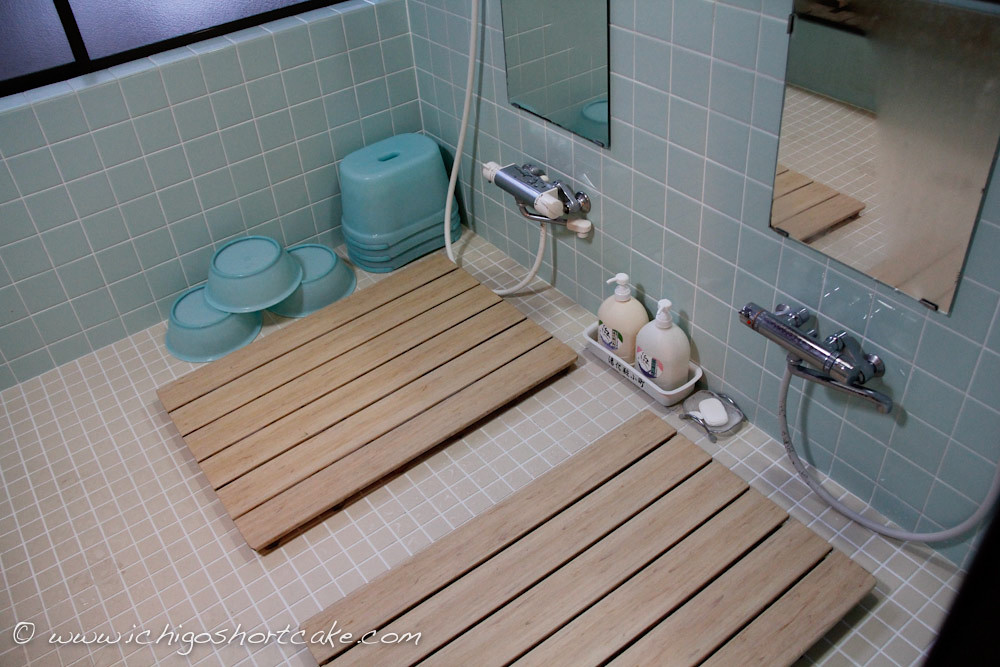
We actually took a bath before dinner, like what traditional Japanese people do. It's meant to cleanse your body and mind, ready for the great meal ahead. I also needed it after that long trip from Kyoto to Shirakawago. I dislike long train rides. The bath (ofuro) can fit two people. It was spotlessly clean and by then I had already been in a few of these so felt quite at ease. You are meant to shower first by using the small blue containers stacked on the side to catch water while you sit on the larger blue stools.
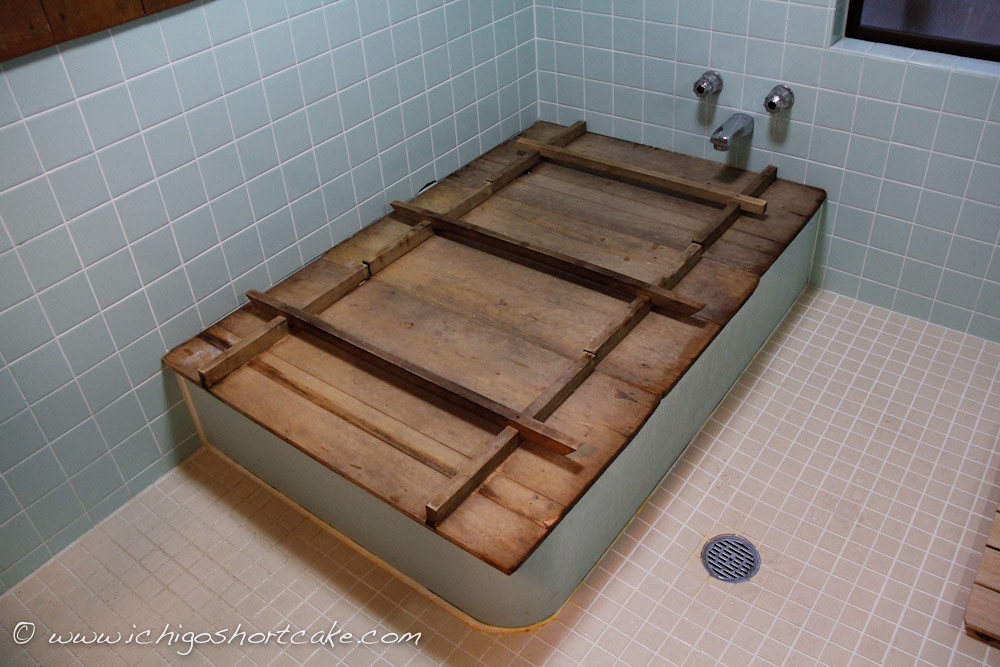
The bath already had very hot water inside which was kept at the right temperature by placing those wooden lids on top. In fact, it was so hot that I had to add cold water.
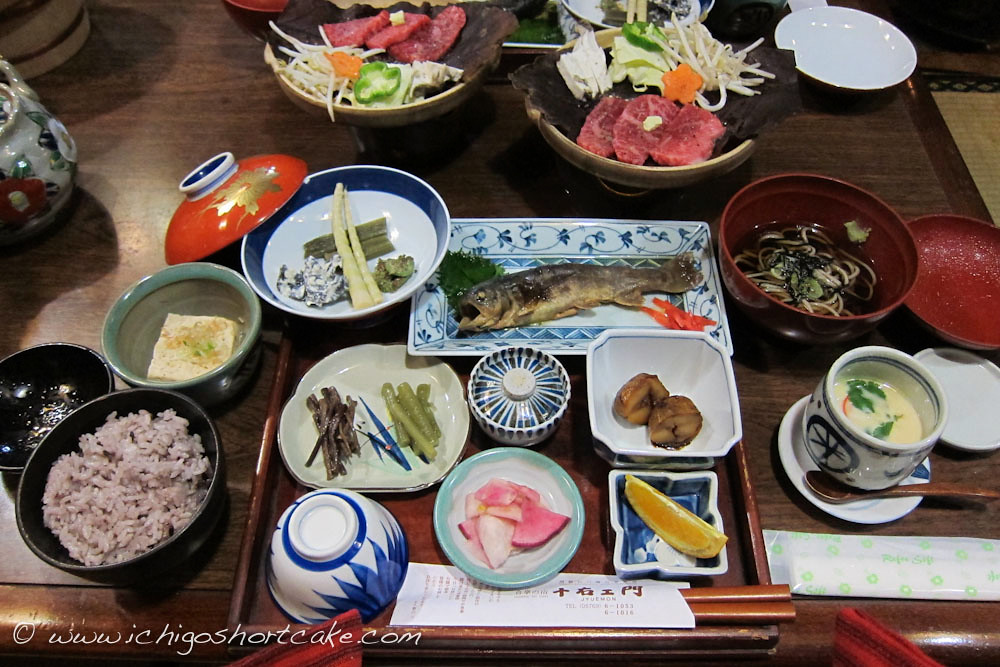
After the bath, we were called to have dinner in the main dining hall. As we entered, the other couple had already been seated and the tables were laid out with many cold and hot dishes. Seeing that made me so hungry! Although the food wasn't cooked on the hearth in the middle, it was still a wonderful meal.
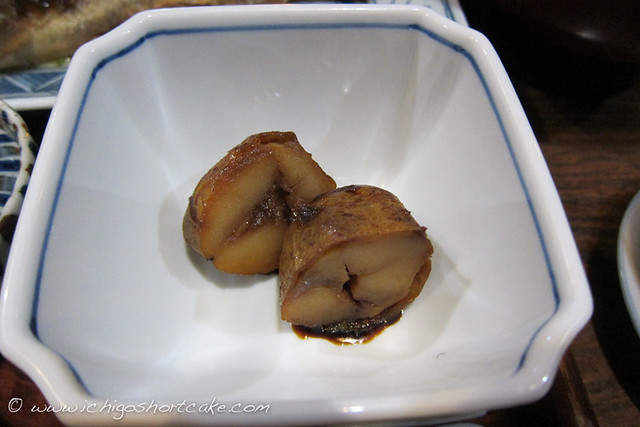 |
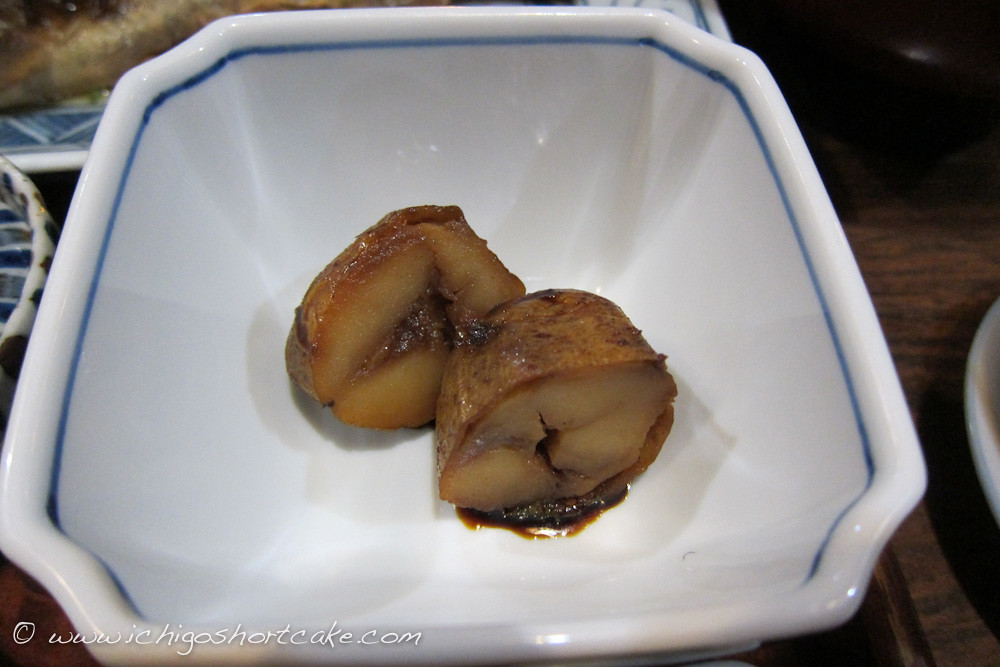
| Marinated chestnuts, sweet and cold |
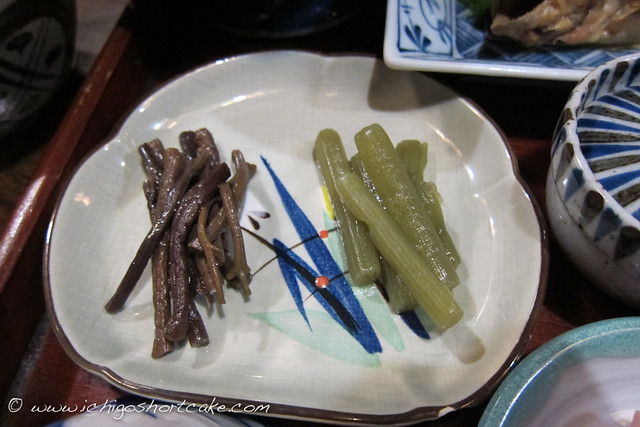 |
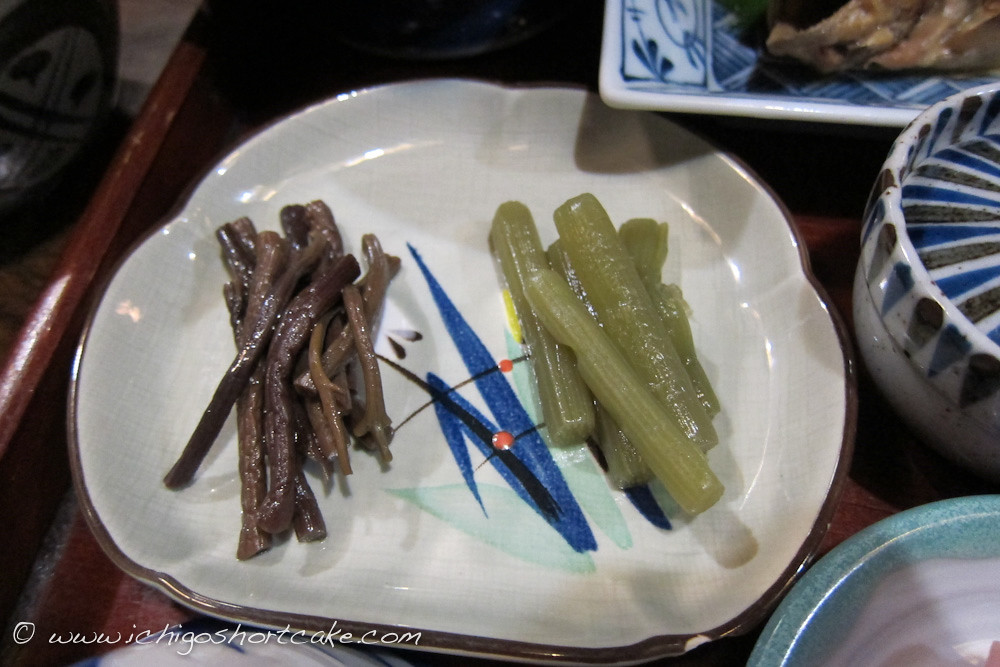
| Cooked veggies, cold |
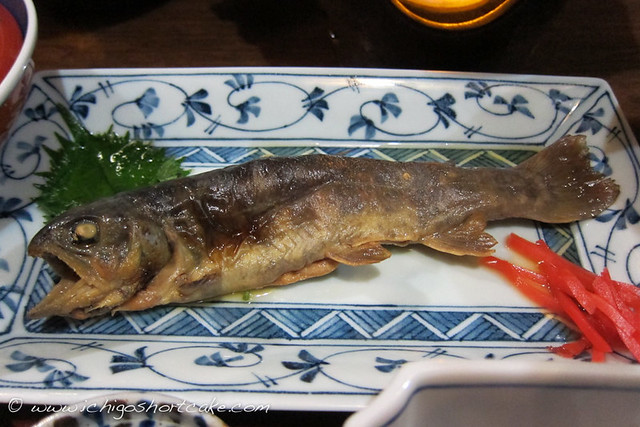 |
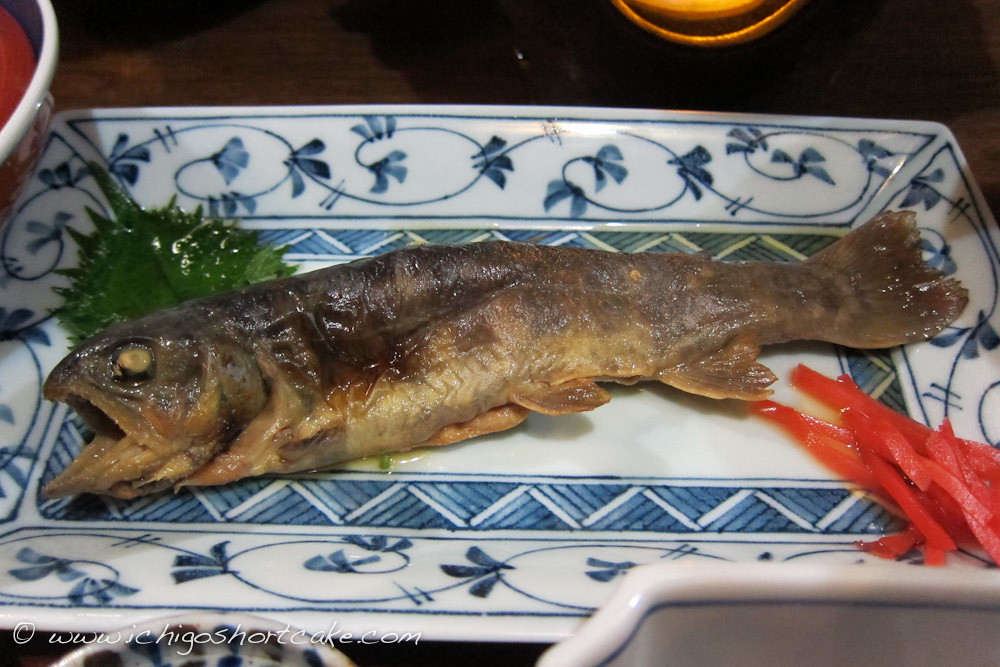
| Iwana fish, found in rivers of Shirakawago (local fish), served cold |
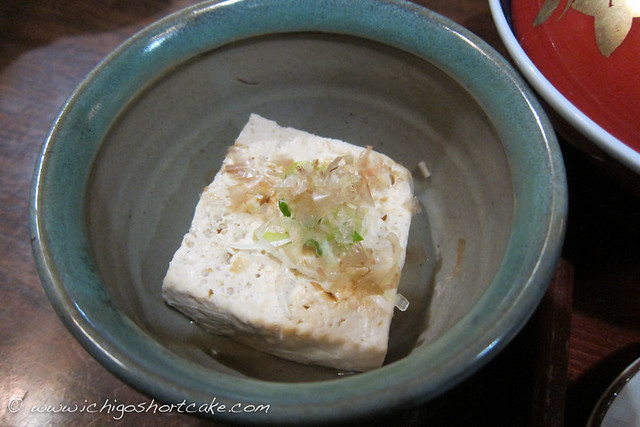 |
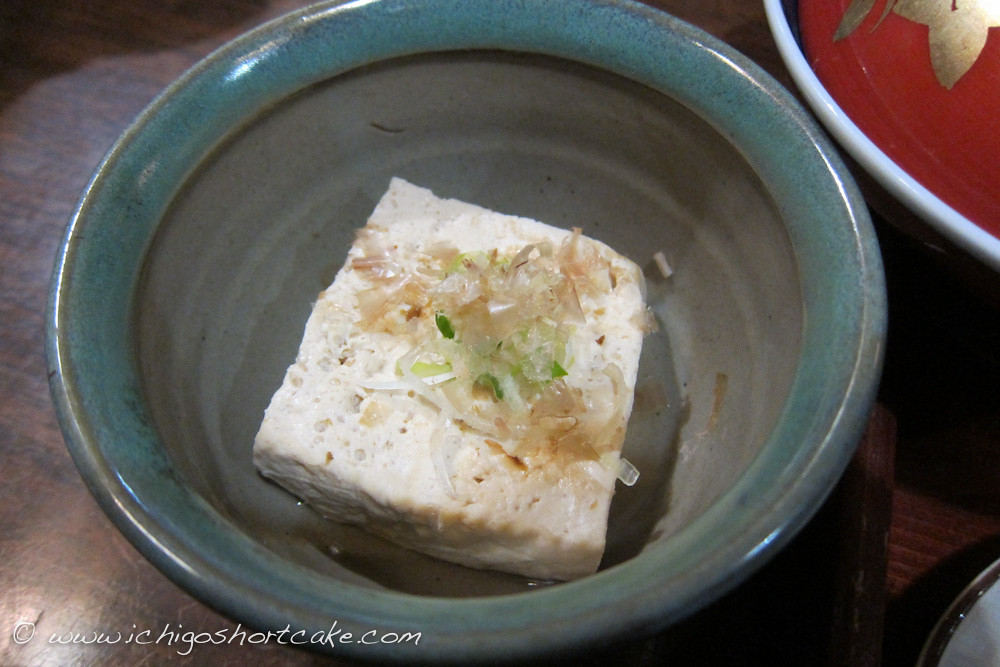
| Tofu, a bit bland and also cold |
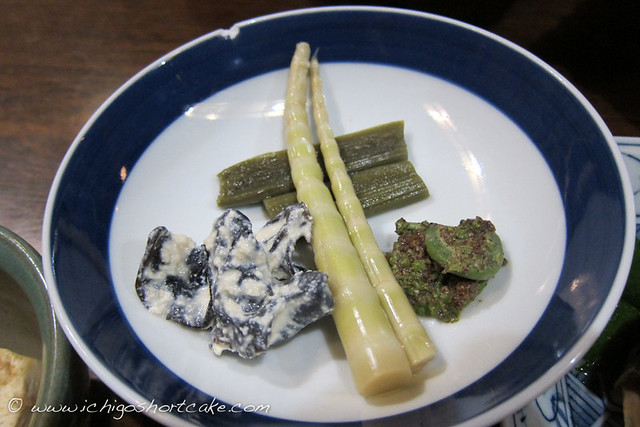 |
| Bamboo shoots |
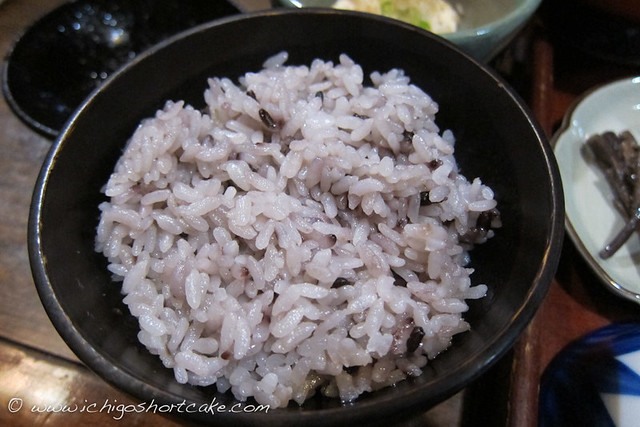 |
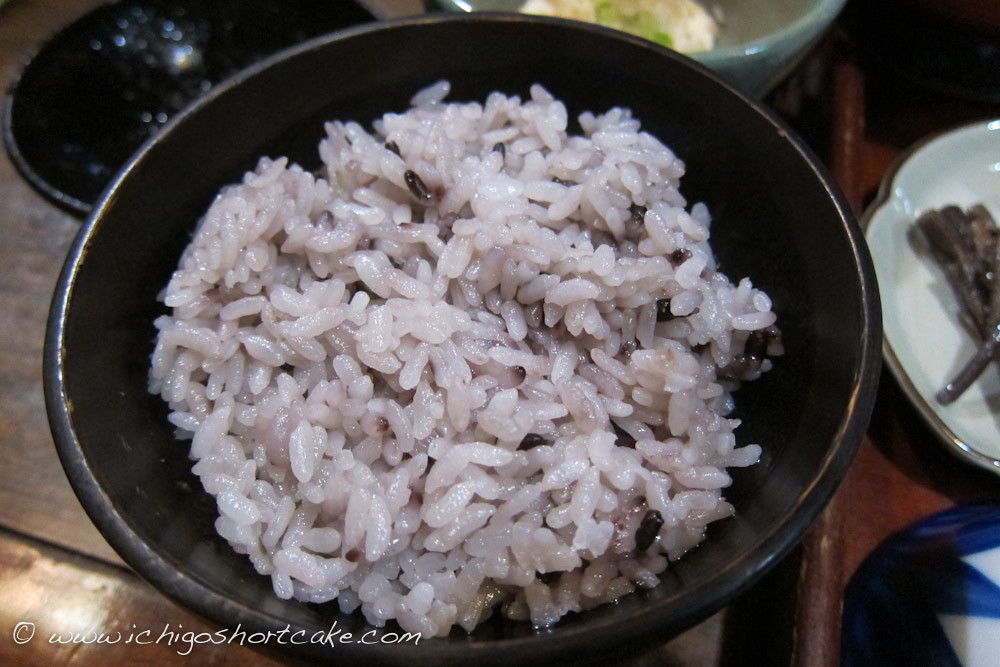
| Mixed white rice and purple glutinous rice |
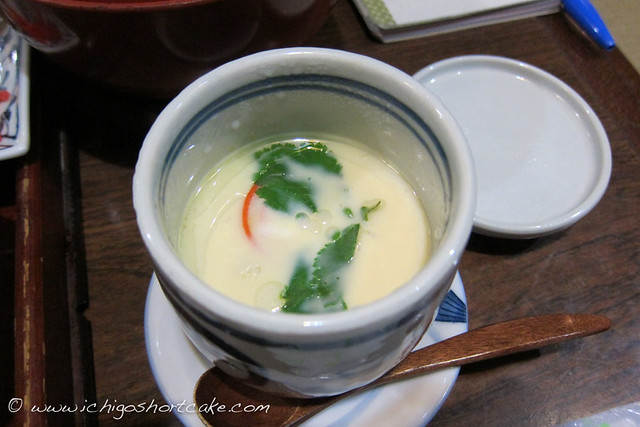 |
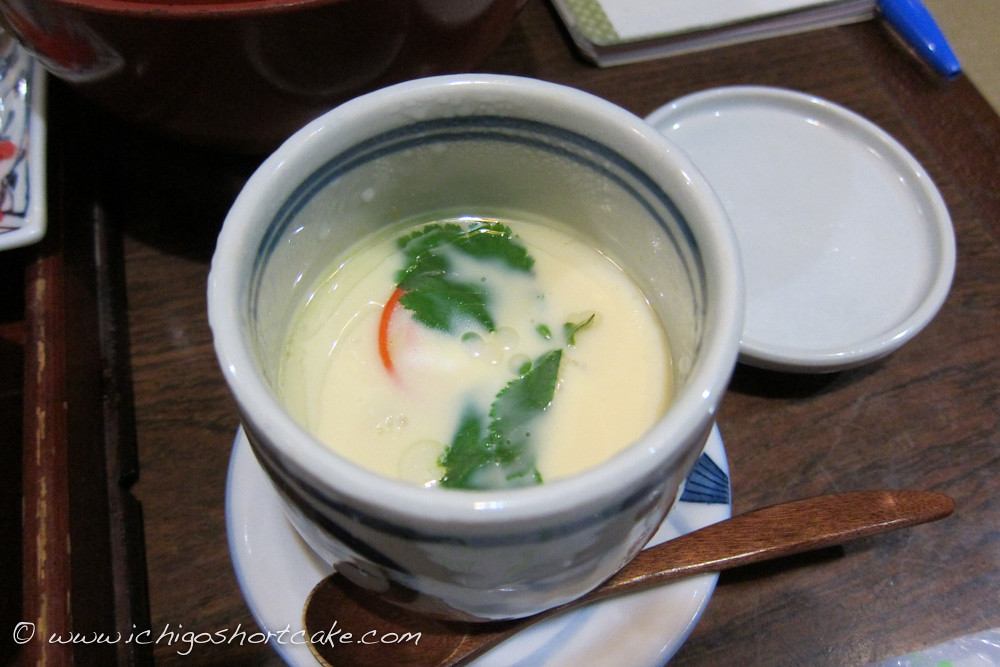
| Chawanmushi - steamed eggs with veggies |
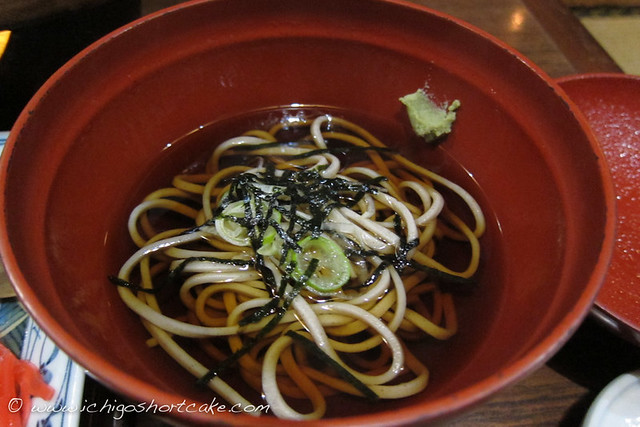 |
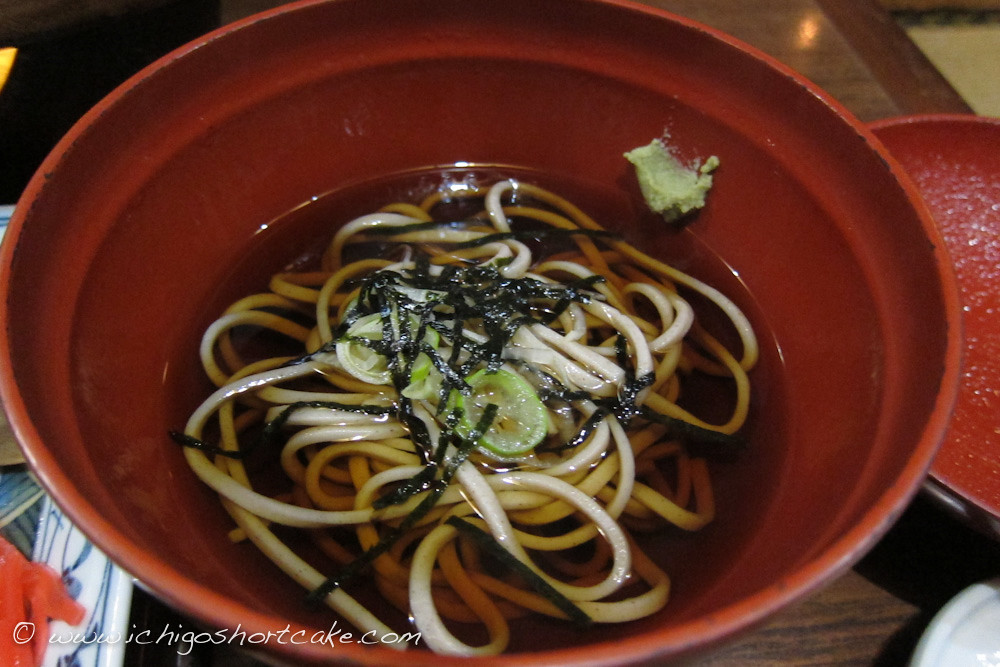
| Soba in soy broth with wasabi - served hot |
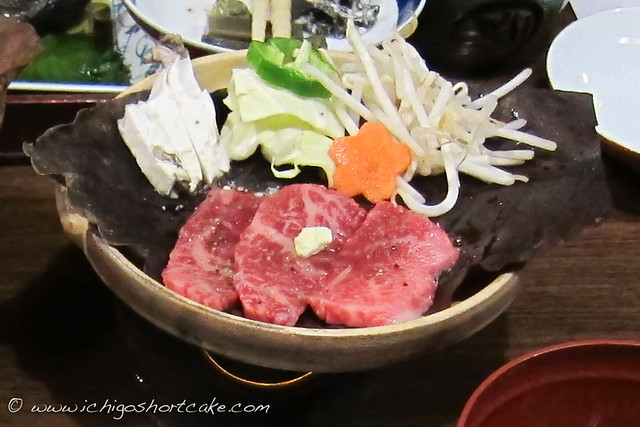 |
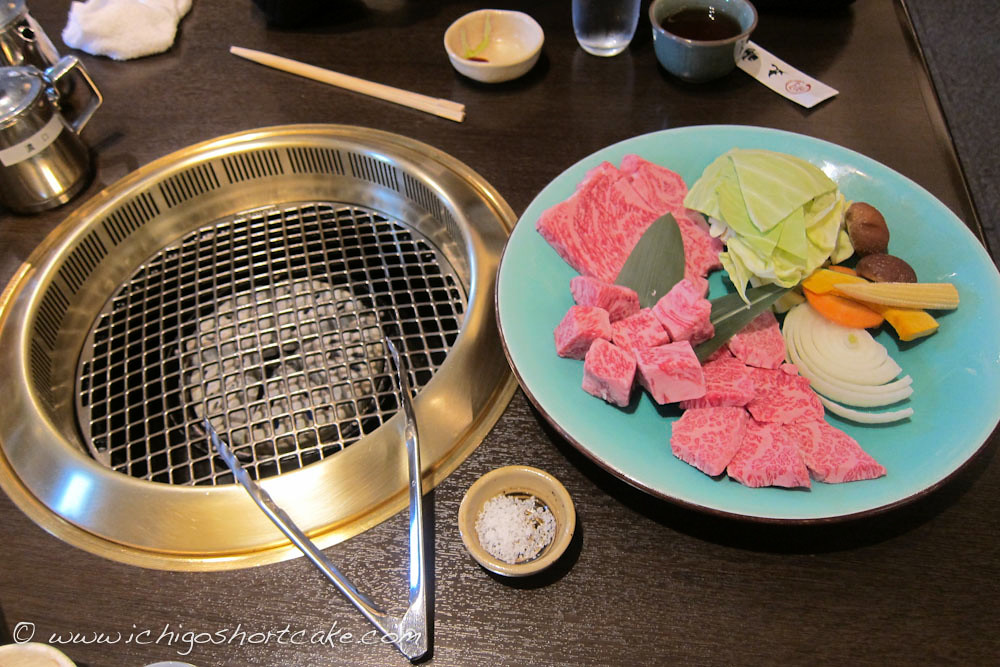
| Highly marbled Hida beef with veggies, cooked at the table. Melted in my mouth and was so so good. |